


As climate impacts become clearer, most firms are still only at the foothills of building robust resilience strategies - BusinessGreen's latest roundtable heard from a range of sustainability execs on how they are grappling with escalating risks
BusinessGreen readers will not need reminding the impacts of climate change and nature loss are already here - indeed, these inter-locking crises are painfully evident in many people's everyday lives, the political landscape, and across global supply chains. As a result, the sobering reality of a world that is in the process of crashing through the 1.5C warming threshold set under the Paris Agreement is belatedly forcing the question of how to respond to escalating climate risks up the political and corporate agenda.
Last week, BusinessGreen brought together over a dozen senior sustainability executives from a raft of different industries to discuss this emerging trend at a roundtable in central London hosted in association with Equans UK & Ireland. The event - which took place under the Chatham House rule - provided candid reflections on how businesses are working to enhance their climate resilience and insights into the many challenges they face while doing so. And while a breadth of viewpoints was on offer, one thing was abundantly clear: pull at thread relating to climate risk and resilience, and a wave of knock-on financial, operational, and reputational impacts quickly start to unravel in myriad unexpected ways.
One attendee highlighted how during the summer 2022 heatwave - when the UK recorded its first ever 40C day - there was a significant and unexpected reduction in the number of people commuting to and within London. With people sheltering from the heat at home, Transport for London (TfL) and other bricks-and-mortar businesses across the capital experienced a whole week of drastically reduced revenues.
For firms with significant urban footprints, such risks necessitate deep thinking and tough decisions as to how to reduce the impact of heat and make urban spaces comfortable for workers and consumers. "We're doing quite a lot of work looking at how to mitigate the heat island effect, such as through increasing greening and leaning heavily on nature-based solutions in the urban centre," they added.
Another delegate spoke about how firms reliant on water resources could find themselves exposed to significant commercial risk as the UK's water supplies become more stretched in the coming years, particularly if droughts become more frequent and intense. "We haven't experienced any issues in terms of water restrictions, but when there is a drought, the priority will be for public needs rather than commercial use - so I can see that this is something that we need to make sure we have contingency plans for," they said.
And then, of course, there are complex transition-related risks to contend with. As another sustainability executive pointed out, there is increasing policy and commercial pressure to shift away from fossil fuel heating, but for companies with a large physical footprint, that requires significant investment and infrastructure planning. Meanwhile, the clean technologies that aim to replace fossil fuel based heating systems need to be able to cope with climate impacts that are set to intensify. Climate technologies need to be able to cope with climate risks.
These are just some examples of the widening range of risks that businesses are facing as the climate and nature crises evolve. And awareness of these risks is only effective if it translates into meaningful action to manage them. Those working in corporate sustainability are therefore now faced with the challenge of building a compelling business case for climate resilience projects, which is often no easy feat.
Building the business case for climate resilience projects
The challenge for climate resilience projects lies in building a business case and calculating returns on investment when dealing with inherent uncertainties and complex risk calculations. A lot depends on a board's appetite for risk and the length of the investment cycles they are working on. But equally, short termism and near-term cost cutting risks storing up huge costs and risks down the line, as climate impacts inevitably intensify.
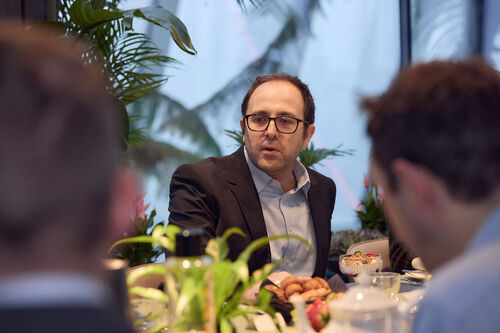
Delegates agreed investments in climate resilience and decarbonisation need to be placed in context. One senior sustainability exec acknowledged how a multi-million pound climate resilience investment programme was initially seen as "eyewatering" for the organisation, before it was explained that it would serve to future proof incomes that could run into the billions. "That got the board's attention," they added.
Delegates agreed there is often a need for patience, which can be frustrating given how urgent climate risks are becoming. The case for investment in climate resilience and decarbonisation often needs to be made again and again, especially given the way risks, costs, and benefits are constantly evolving.
There can also still be internal resistance from colleagues who have little understanding of climate risk or are even sceptical of the need for decarbonisation at a time when there is a visible backlash against ESG considerations in the business pages. Delegates spoke of the need for a "multi-year education process" and an understanding that while some people would be very interested, others may be less receptive to arguments about climate risks.
Consequently, it remains crucial to ground sustainability and climate resilience projects in commercial imperatives. That means highlighting the considerable co-benefits that come from climate resilience projects, which can range from enhanced productivity to lower insurance premiums. As one delegate observed, "the CEO will come in and say sustainability is good for business, because it helps manage our costs, creates new revenue streams, and its good for customers, clients, and winning government contracts - it's all about the framing and the messaging."
Building the business case for mapping climate risks and enhancing resilience can also become a lot easier if sustainability execs can call upon allies across the business. "My role is to decentralise sustainability so that there is no central team and everybody is educated and armed enough on the importance of these issues, so it drives their decision making," observed one attendee, who also explained the benefits of having a CFO who it responsible for carbon budgets or an operations team that is tasked with tracking climate risks. Projects are more likely to get sign off if they are backed by multiple departments within an organisation and can demonstrate a range of benefits in terms of cost reduction, risk management, or new commercial opportunities.
Juggling wider economic and geopolitical risks
Climate resilience does appear to be gaining more traction in the boardroom, but it is also having to complete for attention with plenty of other risks. It is perhaps no great surprise that the World Economic Forum's latest Global Risks Report 2025 saw climate and environmental issues drop down the list of priorities, as political and business leaders are forced to wrestle with escalating geopolitical and economic risks.
"It's become harder to focus to just on climate - there's a lot of other risks related to responsible business, human rights, supply chains and cyber security," observed one participant at the roubdtable. "Again, it's that difficulty of keeping ESG on the agenda, perhaps by tying it to other large items set for discussion, such as geopolitical, economic, and sovereignty threats."

It leaves those in charge of sustainability at their companies with a huge amount to contend with. But the harsh reality is that climate risks are only going to intensify for all organisations, and responsible businesses will need a plan to enhance their resilience in the face of such risks. Repeatedly making the case to persuade different groups - from consumers and clients, to colleagues, CFOs and CEOs - that climate risks are real and that addressing them can unlock considerable savings and opportunities, remains a key part of the job for sustainability professionals. As several figures at the roundtable pointed out, in many ways the modern sustainability executive is just as much a politician as a businessperson.
"That's kind of what we all do," said James Rook, managing director for Carbon Shift - Equans UK & Ireland's end-to-end decarbonisation service. "If you're a sustainability professional, you become multilingual in the languages of not just sustainability but engineering, finance, and more."
Summing up the conversation, Rook said that in 2026 building the business case for climate and nature resilience at a company is about transitioning the message from environmental social governance (ESG) to return on investment (ROI). "I think we've probably moved away from those less substantive brand conversations towards hard investment decisions, and the adaptation piece is starting to come into that," he said.
It is also important to remember how far things have come in a short period of time with regards to sustainability, clean technologies, and corporate understanding of climate and nature risk, Rook added.
"We have a very stochastic view of the short term, but I'm still very positive about the progress we've made as an industry," he said.
It can be tough working in sustainability in 2026, but it is also a hugely exciting role given the potential to deliver projects and innovations that can deliver economic and social benefits for decades to come. The tone around corporate sustainability may have shifted in recent years, but the need to front up to the risks presented by the climate and nature crises remains as urgent as ever.
The BusinessGreen Breakfast Briefing - 'How to embed climate resilience and decarbonisation in your core strategies' - was hosted in association with Equans UK & Ireland.


