


The Plenitude project partners at the Enough mycoprotein factory in the Netherlands | Credit: Plenitude
A seven-year project bringing together 10 organisations has delivered a new mycoprotein factory and reams of valuable data and insights to support the development of a circular ecosystem for alternative protein products
How do you solve a problem like the world's deeply unsustainable and insecure food system?
After all, evidence which lays bare the worsening impacts of humanity's seemingly insatiable appetite for meat is hard to argue with. As well as being a major driver of deforestation, biodiversity loss, methane emissions, water pollution, and soil erosion, some calculations suggest the agri-food sector is responsible for more than 30 per cent of total greenhouse gas emissions and around half of all habitable land use.
But such is animal agriculture's cultural and economic hegemony, that delivering the shifts in tastes, behaviours, and supply chains needed to put the food system on a more sustainable and resilient path presents a major and ongoing challenge. Chicken, pork, lamb, beef, and fish still dominate supermarket shelves, as well as restaurant and takeaway menus. And, while there is growing evidence meat consumption in Europe is slowly declining, it is still estimated to stand at between 66-78kg per person a year. That amounts to each and every person consuming the equivalent of around 40 chickens - or four to five lambs, one to two pigs, or up to a quarter of an entire cow each and every year.
For context, a major report last year by the EAT-Lancet Commission - a collaboration of 70 leading food, health and climate experts from 35 countries - recommended a maximum consumption level of around 15.7kg of meat per person a year to deliver diets that are both healthy and allow for a fair, environmentally sustainable food system. Clearly, there is a long way to go to deliver a shift in diets of that magnitude.
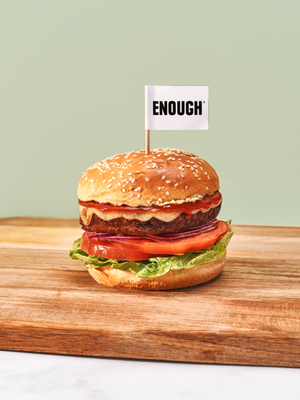
Against this backdrop a variety of alternative proteins - whether plant-based, fermented or lab-grown, and everything in between - have come to the fore in recent years promising sustenance and nutrition without the same environmental impacts and ethical dilemmas associated with the industrial livestock industry. But from a near standing start and faced with established and dominant intensive animal agriculture industry of the 21st century, can entirely new industries and technologies for alternative proteins break into the market?
Plenitude
It is a question that Plenitude - a European consortium of 10 companies across the food and biotech industry - has sought to find answers to.
Backed by almost €17m in funding from the EU's Circular Bio-based Europe Joint Undertaking (CBE-JU) programme, the pioneering project was launched in 2019 with an aim to build new bio-based value chains to address sustainability challenges at the heart of the food system by creating new, scalable, and sustainable alternative protein products, researching their applications and assessing their market potential.
Its members include mycoprotein developer Enough, agri-food giant Cargill, plant-based 'meat' brand Vivera, cell-cultured meat develop MosaMeat, flavour, scent, and nutrition specialist IFF, and alternative proteins network and events provider Bridge2Food, among others.
Fast forward seven years, and the project has delivered reams of valuable research, insights, and industry and policy recommendations, laid the foundations of a circular and sustainable value chain for a new industry, and - most notably - built an entirely new commercial factory that is now pumping out 10,000 tonnes a year of ABUNDA, a meat-alternative that is rich in protein, high in fibre, and completely free of animal products.
Of course, the market for plant-based food and meat-alternative products has shifted significantly in the seven years since Plenitude launched. The initial fervour which drove consumers and investors to plant-based diets and meat-alternative products prior to the Covid-19 pandemic has softened somewhat, and earlier hopes of rapid, sustained growth have dissipated amid rising production costs, cost of living concerns, and growing consumer scepticism towards foods perceived to be 'ultra-processed'.

But despite a downturn in fortunes for some brands and a number of casualties along the way, most observers and investors still believe the market for meat-alternative products is primed for long-term growth, driven by a growing global population, increasing demand for protein, and continuing health and sustainability concerns among consumers and policymakers.
Yet compared to 2019, the average European consumer today is arguably even more discerning about the price, flavour, environmental claims, and health and nutritional values of the food they eat, particularly if those products are designed to tempt them away from meat.
Mycoprotein
Which is why the partners behind Plenitude firmly believe mycoprotein may still be the answer consumers are looking for both in 2026 and into the future. Crucially, mycoprotein differs from many other meat-alternative options, as it is neither an amalgam of myriad processed ingredients, nor is it cultivated in a lab. Rather, it is a protein source derived from fungi that is made in fermentation tanks using a process similar to brewing beer and resulting in a relatively short ingredients list.
"It's a whole food that's high in amino acids, fibre and protein, and from a sustainability perspective it also doesn't have some of the issues associated with other alternative protein," explains Craig Johnston, co-founder at Enough, which is coordinating the Plenitude project.
"It also has a very neutral taste, whereas some other plant proteins have a significant aftertaste, which makes them more challenging in terms of the formulation. Our flagship product is chicken alternative, and the actual structure of the micro protein is fantastic for mimicking chicken, so there's no need for post processing."
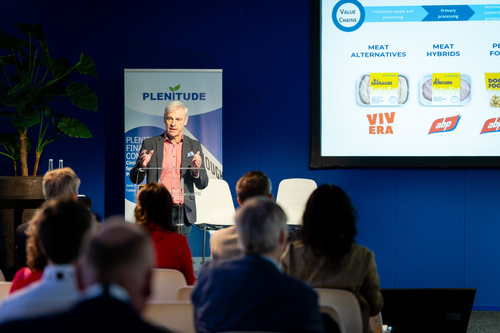
Mycoprotein also boasts a long history as a food-grade meat-alternative product, so there is significant research, commercial knowledge, and regulatory experience for Enough and its partners to lean on. That is because mycoprotein forms the basis of products that have been manufactured and sold under the food brand Quorn for the past four decades. But whereas Quorn originally operated a fully-integrated supply chain, Plenitude is aiming to build a wider value chain for mycoprotein with numerous partners - and it is this partnership approach which makes the project particularly interesting.
For one, it has seen Enough co-locate its mycoprotein factory - which opened in 2023 - with Cargill's existing Sas van Gent refinery in Netherlands, enabling the latter to utilise the former's infrastructure, thereby unlocking significant efficiencies and circular economy benefits in the process.
At the same time, it has also enabled some partners to explore the feasibility of mycoprotein's wider potential, such in the production of pet food and - in the case of Lactips - its use in creating sustainable bioplastics. Moreover, MosaMeat has been involved in the project to probe the potential for developing 'hybrid' products combining both mycoprotein and lab-grown meat in the same product.
Life Cycle Assessment
One of the most crucial deliverables for Plenitude was to produce a Life Cycle Assessment (LCA) evaluating the full 'cradle to grave' environmental impacts from the raw materials, production, and consumption of the mycoprotein produced at Enough's factory.
That is where another of the project's partners - Life Cycle Engineering (LCE) - came in. And with the Italian firm having completed and further updated the LCA study, the results can now be finally revealed before the project draws to a close. They are unambiguously positive.
The LCA estimated every kilogram of mycoprotein produced, stored, and distributed used 125 litres of freshwater and 1.2 square metres of land, while also generating around 5kg of eutrophication pollution in fresh and marine waters. And as for climate impact, it estimated the production, storage, and distribution of 1kg mycoprotein generated around 3kg of CO2 equivalent emissions. All that, and not a single animal was harmed or farmed along the way.
For Sonia Pignatelli, LCE's senior LCA analyst, such findings are "very encouraging". They compare favourably with the estimated life cycle impacts of a host of other plant-based meat alternatives, such as pea protein or soybean concentrate, and are about "10 times lower in impact than beef meat," she tells BusinessGreen.
"Its impact is lower than pork and at least comparable with chicken - depending on which kind of chicken," Pignatelli explains. "From a carbon footprint point of view, most of the impact of poultry production comes from growing chicken feed and general farm management."
Further societal benefits from mycoprotein were also uncovered as part of a related Social LCA (S-LCA) carried out by LCE. These include consumer health benefits, improved working conditions, and support for local community development, according to the study.
"In particular, the creation of stable jobs, the involvement of local suppliers, and the low environmental footprint of the production process were among the most relevant social benefits," the LCA states. "Risks were identified as limited, isolated, and generally well-managed through proactive health and safety measures and responsible employment practices."
And, while taste-testing carried out as part of the Plenitude project highlights some pockets of concern related to taste, pricing and product familiarity among consumers, it overall found "a generally favourable perception of mycoprotein-based products, especially among younger demographics".
"From a social acceptance point of view, we saw that people are quite curious to experience new tastes," explained Pignatelli. "We saw at tasting events that we ran that people like this product, and so we think mycoprotein can have a large market."
Social acceptance
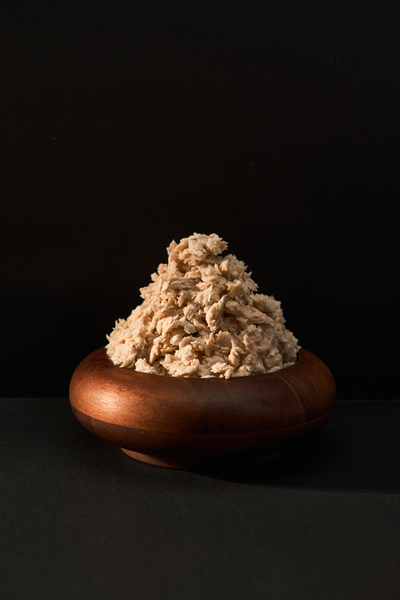
When it comes to marketing and social acceptance, though, Mycoprotein is still likely to face challenges. Indeed, the study emphasises the importance of effective communication, education, and marketing to both address any misconceptions about mycoprotein 'meat' products and also "clearly convey" its environmental and nutritional advantages.
That is in part because, as Johnston says, mycoprotein does not have quite the same level of awareness or understanding among the wider public as either animal products or more conventional, widely known plant-based products such as oat milk.
"One of the issues we have is what to call the product, because technically it isn't made from mushroom, but if you say 'mycoprotein' it doesn't really resonate with people," he adds.
For Johnston, the LCA process has been hugely valuable in helping him identify areas of the mycoprotein production process where further improvements and efficiencies can be developed. As such, if Enough's partners in the emerging mycoprotein segment can come up with solutions to these issues, he believes there is huge potential for both market growth as well as further efficiencies of scale, emissions reductions, and cost savings in production.
With that in mind, Enough is aiming to expand the capacity of the mycoprotein factory built with the support of further external investment in Sas van Gent through the Plenitude project. The facility currently employs 55 permanent staff, but the firm's ambition is to ramp up production capacity at the plant to 20,000 tonnes annually within the next few years, potentially adding another 20 new jobs.
In the longer term, Enough is aiming to expand the factory's capacity further to 60,000 tonnes of mycoprotein a year, supporting 100 jobs in total, before potentially rising capacity to as much as 200,000 tonnes a year by the next decade. To attract requisite demand for mycoprotein 'meat' products for those goals to be realised, though, the company and its Plenitude partners will need to encourage more people to eschew meat for mycoprotein-based products in the coming years.
Does Johnston feel confident such a sea change in favour of healthier, more sustainable diets is possible across Europe?
"I would say I'm optimistic," he says. "But I would also say that we're not advocating that people have mycoprotein in every single meal - flexitarian approaches can work too - it's more about just having a balanced diet."
Whatever the future holds for Europe's food system, Johnston is adamant the partnership approach taken through Plenitude has been a huge driver for the success of the project, and stands Enough - and the potential for mycoprotein - in good stead.
"As a smaller company, it really helps to leverage funding," he says. "I would say it gives a very good foundation for future growth and expansion."
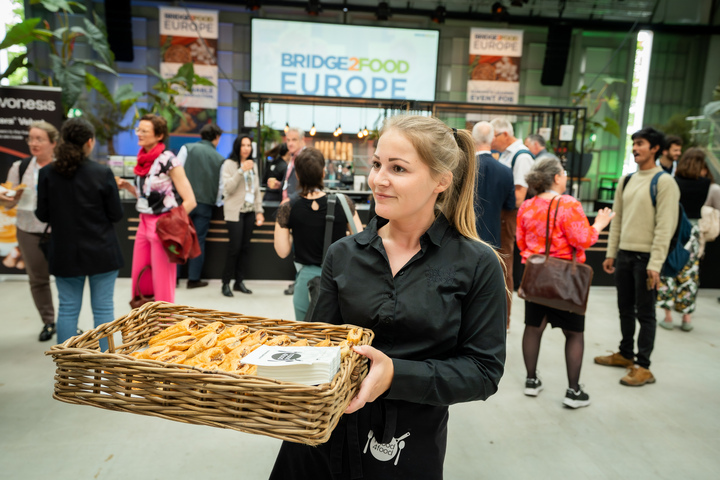
BusinessGreen is a sister brand of Plenitude partner, Bridge2Food.


