


Credit: Wattstor
Partner Insight: Kevin Ball from Wattstor explains how the firm can seamlessly blend grid power with onsite generation, consolidating its supply into a single, fully dynamic tariff
The UK's energy system is undergoing a massive, unprecedented transition.
If you look back over the last 25 years, we were de-industrialising and using less energy, even as grid capacity increased. Today, however, we are facing a completely new paradigm: we must accommodate highly scattered, intermittent renewable generation while simultaneously managing a surge in overall electricity demand.
For C-suite decision-makers, this macroeconomic shift is no longer just an abstract sustainability challenge; it is about to become a very real, very painful line-item expense on the balance sheet.
To fund the necessary estimated £70bn grid infrastructure upgrade over the next five years, the way businesses are being charged for transmission services is fundamentally changing. For years, finance leaders could rely on traditional energy procurement and basic energy efficiency measures, such as reducing consumption during winter 'triad' peak periods, to avoid high transmission charges.
That mechanism is being phased out and is now virtually gone.
Following Ofgem's Targeted Charging Review (TCR), most Transmission Network Use of System (TNUoS) charges are now decoupled from actual consumption. They have been replaced by an unavoidable, fixed daily charge: the Transmission Demand Residual (TDR).
This has, in turn, created a profound regulatory mismatch. Current network rules punish businesses for brief power spikes, forcing them to pay massive 365-day standing charges for capacity needed only in short bursts.
Worse still, these charges are locked into rigid five-year price control periods. In April 2026, fixed TDR charges will jump by over 65 per cent. For many medium-sized energy users, this means an unavoidable bill increase of around £75,000 per year, locked in until March 2031.
Why traditional energy strategies no longer work
Historically, rising energy costs could be managed through smart procurement or site-wide efficiency drives. Today, however, these new fixed capacity charges require a fundamentally different approach. Because TDR bands are based on your peak connection rather than your overall volume, traditional strategies only solve part of the equation. Even a standard solar installation, while excellent for reducing overall consumption, cannot always guarantee power during a sudden demand spike on a dark winter afternoon.
In addition, the obvious regulatory fix; simply reducing your contracted import capacity to drop into a cheaper band – is no longer straightforward. Because TDR bands are locked into five-year periods, incremental capacity reductions mid-cycle are no longer recognised. Under current rules, the only way to trigger a mid-period band reduction is if a site surrenders more than 50 per cent of its total contracted capacity.
How storage and generation can reduce grid exposure
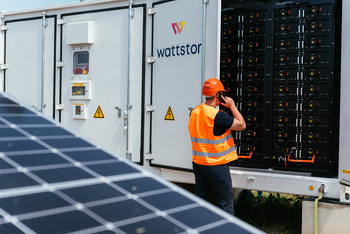
By pairing on-site renewable generation with a Battery Energy Storage System (BESS), a business can effectively decouple its operational power needs from its grid dependence. Think of the battery as a dynamic, invisible buffer. It monitors your site's demand in real-time, instantly stepping in to provide power during sudden surges.
This smooths out your grid profile seamlessly, ensuring your core operations never have to slow down. This localised buffering creates additional headroom within existing capacity, allowing operations to grow without triggering higher fixed charges.
De-risking the transition with a fully funded solution
Even when the operational and regulatory benefits are clear, the capital expenditure required for commercial solar and battery storage remains a significant hurdle for many organisations.
To remove this financial barrier, Wattstor developed the Price Protect model. Rather than expecting businesses to shoulder the upfront cost and technical complexity of new infrastructure, we fully fund, build, and operate the generation and storage assets directly on your site.
Wattstor seamlessly blends your grid power with the onsite generation, consolidating your supply into a single, fully dynamic tariff. This uniquely structured agreement tracks the UK hourly wholesale price (allowing you to capitalise on market dips with a guaranteed discount) while strictly shielding your balance sheet with a fixed, non-indexed price cap for up to 25 years.
Ultimately, Wattstor absorbs the technical, operational, and financial risks of the transition. Your business secures the physical infrastructure needed to permanently lower its capacity charges, alongside immediate and long-term energy savings, with zero capital investment required. A true win win.
**
The grid is changing and the costs of inaction are rising rapidly.
The businesses that thrive in this new era will be the ones that take control of their own energy – localised not centralised.
**
Kevin Ball is chief commercial officer at Wattstor.
This article is sponsored by Wattstor.


