


Credit: BusinesssGreen / Jonathan Blackham
Are corporate sustainability efforts entering a new and more mature phase? BusinessGreen's latest roundtable heard from senior execs about how they are grappling with economic and political headwinds as they reappraise their net zero strategies
Only a decade ago, very few companies had net zero emissions targets in place. Donald Trump may have won the 2016 US election, while the Brexit vote dominated political discourse in the UK, but the response to the Paris Agreement in late 2015 saw governments and businesses all around the world start work on increasingly ambitious decarbonisation strategies. A wave of public climate protests and clean tech policies followed, prompting thousands of companies to announce stretching emissions goals. Ten years on, and for all the vocal opposition from Trump and his allies, 84 per cent of the global economy is covered by net zero emissions targets.
However, this tangible progress now faces arguably its biggest threat since the signing of the Paris Agreement. Trump has accelerated his slash and burn approach to US climate and environmental policy, while urging his allies around the world to follow suit. This backlash has triggered a culture of fear across parts of the private sector, with firms engaging in so-called 'greenhushing' where they continue to invest in decarbonisation but refuse to talk about it for fear of retribution from climate sceptic legislators or customers. Meanwhile, a number of companies have sought to reassess or even weaken their climate targets and sustainability commitments, either because of the obvious political or economic headwinds or because the goals were simply too ambitious in the first place. The situation is then further complicated by the fact opposition to climate action has ramped up just as climate impacts become an even more obvious threat to the bottom line, fossil fuel supplies are being threatened by geopolitical tensions, and clean technologies such as renewables and electric vehicles are more competitive than ever and are being deployed at record pace.
For those working in corporate sustainability, these competing trends and fast-evolving political and economic headwinds are proving difficult to navigate. Could companies have futureproofed their sustainability strategies better for the world of 2026? And, are there lessons that can be learned from the past decade to help sustainability executives develop more resilient and effective strategies for the years ahead?
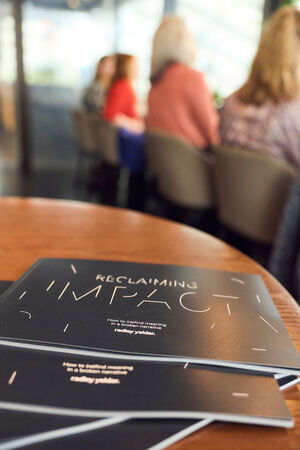
These questions formed the basis of discussions at BusinessGreen's recent roundtable in central London, hosted in association with Radley Yeldar, which brought together over a dozen senior sustainability executives from a range of different sectors. Taking place under the Chatham House rule, the invite-only event drew candid reflections from participants on how different businesses and organisations are approaching corporate sustainability in 2026, as sustainability executives expand their roles and responsibilities in new directions and grapple with the tumult of rapid geopolitical, technological, and cultural change that characterises the modern economy.
To kick off the discussion, each participant was asked to reflect on some of the biggest challenges they currently face in their role, from which several common themes immediately emerged.
Top of the list for many of those present was the current geopolitical situation, with President Trump the figurehead for growing hostility towards climate action, which may have failed to win over much of the public but which could still lead to a drastic row back of UK climate policies depending on the result of the next election.
One corporate sustainability lead acknowledged "there's a lot going on" across the political and policy landscape, which could have a direct impact on the company's own net zero emissions goals. "A lot of what we spend our time thinking about is how do we work closer to get to scaling the solutions needed to meet our targets," they explained. "And without the enabling external environment, that becomes more difficult."
While several participants argued the supposed ‘ESG backlash' triggered by Trump's return to the White House had been exaggerated, there was broad agreement that it had by necessity rapidly changed the rhetoric and language of the corporate sustainability profession.
One participant said some businesses had been left "terrified" of saying something on ESG that might upset an investor or expose them to litigation - a trend that is particularly apparent among businesses with significant footprints in the US.
Rosanna Sarene director of integrated reporting and sustainability at roundtable co-host RY, echoed these observations.
"Over the past 18 months, 'greenhushing' has quietly become one of the defining trends in corporate sustainability," she said. "Businesses aren't doing less — but they are saying far less, often holding back from communicating some of the more substantive progress underway where there is residual uncertainty or perceived risk. But silence is not a neutral strategy: it creates ambiguity for investors, erodes stakeholder confidence, and ultimately undermines trust and accountability, weakening the strategic value of sustainability communications."
For some, the situation has led to a "lull" in enthusiasm or discussions focused on corporate environmental and climate action over the past year or so. "Sustainability has been somewhat losing airtime, I guess, in certain conversations," was how one investment manager put it. "Part of that, I like to think, is because we have been getting on top of the things investors have been asking for, but I also just think the geopolitical environment and other distractions and priorities are taking up a lot of the conversation time and space at the moment, and that leaves a smaller amount of space for sustainability. So, when you get that opportunity, that's when messaging needs to be really clear and strong."
Corporate sustainability entering maturity

However, there are signs that so-called 'greenhushing' is not solely due to a desire to avoid political or media backlash. There is also a sense that many corporates are simply now focused internally on working out how to translate net zero commitments into action.
One sustainability executive characterised the shift as having gone from science-based target setting five years ago, to working to actually embed those goals and responsibilities into governance structures throughout the business.
"We're moving from enthusiastic teenage years, to perhaps having just left university now, where things are a little bit more mature," they said. "We have responsibilities and are getting on with doing the right things."
For some, that growing maturity is increasingly tangible in the way sustainability is discussed and treated within their organisation's, with rhetoric focused less on 'saving the planet', and more on tackling risks and boosting the bottom line. "It's been a terrible 2025 where I had to re-explain quite a lot of why we're doing this and why it matters internally," one director at a leading investment firm said. "But now, when we're talking to someone in the business, we're talking about EBITDA, CAPEX, and ROI."
A peer at a major property firm similarly noted how the broad business case for climate action had been accepted within their organisation, meaning the challenge now is "on execution and capacity". "What that has meant is that I am way more in the 'boiler room' - understanding what it takes to take this action on the ground," they explained.
Another participant reflected on how this shift in focus towards project delivery was boosting the influence of sustainability professionals. "Because sustainability is a cross-functional unit, I really got a knack for putting the finger on organisational dilemmas or unsolved problems... so it often ended up being part of my role to solve them," they explained.
But the more mature phase corporate sustainability appears to have entered also comes with its drawbacks. After all, identifying problems across a business is not always a recipe for making a department popular. As another participant put it: "You need to bring ideas, not just problems."
It also make sense to spread responsibility for sustainability progress as widely as possible. One sustainability chief explained how they had organised an annual sustainability conference for hundreds of managers across their firm, but had refrained from speaking themselves at the event. "Everybody expects me to talk about sustainability, so I've deliberately positioned myself such that I get other people to talk about it," they said. "We've had the head of security, head of car parking, and head of IT - because sustainability is something that everybody in the business can do… It's much more powerful when other people are talking about it, and it's up to me to enable them and put those structures in place."
Resource challenges and AI
At the same time, bandwidth - or a lack thereof - is becoming a growing challenge for those working in corporate sustainability.
During the roundtable, one sustainability executive relayed how they had sought to organise an annual meeting of partners, stakeholders, and suppliers in order to foster deeper collaboration and pool resources to help cut the cost of decarbonisation. But finding a suitable time and place for that meeting has proved elusive.
"Getting the same people to a quarterly meeting and actually getting them to do something is… well I probably shouldn't have any hair left, because it is driving me nuts," they said.
Artificial Intelligence (AI) was another issue that frequently came up during the roundtable, as executives balance the desire to harness a potentially useful tool for boosting productivity with concerns over accuracy and environmental impacts, as well as worries that this exciting, shiny new technology risks distracting boards from the pressing need to continue to prioritise corporate climate action.
One chief impact officer in attendance admitted "everything's about AI" at their company, so "quite early on I made sure AI was part of my role [which] let me into many more rooms than I'd been in before, so that was really valuable".
But while they persuaded their bosses that taking an ethical, responsible approach to AI could be a "differentiator" with rivals that are spending far more on the technology, they lamented how the time, energy, and resources being pumped into AI isn't necessarily being replicated when it comes to sustainability efforts.
Others pointed out that AI is rapidly changing how information is being disseminated and consumed, particularly with regards to corporate sustainability reports.
"From the communication side of what we do, AI is massively impacting everything, whether it's reports and communications being read, and whether it is actually AI or humans reading this information," one participant said, who emphasised the importance of ensuring humans continue to "sense check" anything that is written and published on behalf of their companies.
It is an evolving situation that may require a rethink for companies in how they design and approach their sustainability reports and communications, given investors and other stakeholders are increasingly using AI software to read reports and summarise the core information they may need, according to Rosanna Sarene from RY.
"If reports aren't structured with AI in mind — from meta-tagging through to how information is organised on the page — there's a risk they won't be interpreted as intended," she said. "Increasingly, different models extract and prioritise information in different ways, which can lead to inconsistent or partial readings of the same disclosure. In that sense, AI is arguably becoming one of the most important ‘stakeholders' for companies today. That makes it all the more important to design reporting with both human and machine audiences in mind, while ensuring outputs remain grounded in human judgement and oversight."
Is there a brighter outlook for corporate sustainability on the horizon?
Despite these challenges - and many more besides - there was a sense of cautious positivity in the room, with several speakers expressing hope the dark days of the 2025 'ESG backlash' may already be in the rear view mirror.
Several causes for optimism were cited, including the advance of regulations such as the EU's Corporate Sustainability Reporting Directive (CRSD), which requires firms to publicly report on elements of their environmental and social impacts. The legislation may have been the focus of a political tussle in Brussels and the final version looks set to be weaker than the original draft, but several roundtable participants argued the latest wave of EU sustainability rules promised to embed a welcome "common language" for corporate sustainability efforts both within organisations and across industries and markets.
"It's been massively helpful for us - it's given us a joint language across the organisation, but more importantly it has given us the ability to identify impact areas and really be critical in demonstrating from top to bottom of the organisation what we are facing," explained one sustainability lead at a multinational company.
Others also highlighted the importance of sustainability disclosure rules in helping to bolster risk management work within companies.
"What I have found with CSRD was actually quite extraordinary," said one participant. "I'm not a proponent, necessarily, of regulation, but it's the first time I saw in my career regulation which did fundamentally change how businesses were operating. I thought that was so incredibly exciting, as sustainability wasn't being siloed as it was before - it now had a seat at the table with the CFO or CRO."
Some speakers also pointed to the increasing use of public procurement by governments - including the UK's - to drive climate and environmental progress by including sustainability requirements in supplier contracts. HMRC, for example, mandates a minimum 10 per cent weighting on social value and sustainability for the contracts it tenders. "That is a commercial differentiator, and certainly one that hasn't been there until more recent years," one speaker explained.

But the biggest driver of progress is simply the growing maturity of corporate sustainability strategies and the clean technologies they are looking to deploy. Businesses have moved beyond the flurry of enthusiastic target-setting and are now focused on delivering real world decarbonisation projects.
That transition has forced some companies to delay 'net zero by 2030' targets that were always too ambitious, but it also means they can now draw on hundreds of examples of successful corporate sustainability projects or clean tech deployments that can then help them justify further investment in these areas. And that library of evidence is only set to grow.
"We've got something that we didn't have previously, which is some proof cases," said one leading sustainability executive. "When a lot of strategies and targets were set, it was a voyage into the unknown to some extent, whereas we are finding that we do now have evidence of where targets are already starting to work, actions have been taken, cost or energy savings are being reaped, and customer satisfaction has been achieved. I think that helps massively - going in showing evidence, data and receipts."
No one at the roundtable was naïve in the face of the geopolitical and economic headwinds faced by their profession - yet for some, these challenges have ensured corporate sustainability efforts have moved into more realistic and pragmatic present phase that should allow them to expand their influence and strengthen their impact over the coming decade. Indeed, corporate sustainability executives are perhaps now better placed than ever to shape that future for the better.
"We're having harder conversations internally and higher up in our company because we're actually involved in more hard-nosed discussions, which is helping to embed those discussions," said one participant. "That is a great thing - we should be having tough discussions because we're talking to the leads of our businesses, whereas beforehand sometimes we were just talking to ourselves."
Another is a firm believer that enthusiasm for environmental action - culturally, politically, and economically - comes in waves, and that after a challenging couple of years, there are signs fresh momentum is building.
"By 2028 I think we'll be back in business - so I've been telling my leaders that this is a big opportunity," they said. "Yes of course corporate sustainability isn't dead and we all know we're coming back up - so how do we prepare in this current dip? Those that prepare and do the work now are the ones who can capitalise on that next big wave."
The BusinessGreen Breakfast Briefing - How to future-proof corporate sustainability strategies - was hosted in association with Radley Yeldar.


