


Credit: Climate Essentials
Partner Insight: Climate Essentials unpacks how supply chains can galvanise decarbonisation
Across most industries, one truth has become increasingly clear. Addressing climate change means addressing supply chains. For many organisations, the majority of emissions sit outside their direct control, embedded in the goods and services they purchase; the ever-present Scope 3, Category 1.
That's why buyers are now turning their attention to their suppliers, asking questions that go far beyond compliance.
What are your climate commitments? How are you measuring progress? Do you have a net zero target? Can you share your plan to reduce emissions?
These questions are becoming central to procurement, partnerships, and even access to finance. The result is a ripple effect: large organisations are driving climate action deep into their value chains, prompting thousands of SMEs to begin their own decarbonisation journey.
At Climate Essentials, we've seen this transformation unfold first-hand. Buyers are no longer waiting for regulation to dictate their approach. They are proactively seeking to understand and reduce their Scope 3 emissions, and in doing so, they're helping and educating suppliers to do the same.
It's all about supply chains
Until recently, conversations about carbon reduction focused on internal operations: switching to renewable electricity, improving energy efficiency, or transitioning to electric vehicles. These actions remain vital, but they only address a fraction of total emissions.
According to the CDP, supply chain emissions are, on average, 11 times higher than a company's operational (Scope 1 and 2) emissions. This realisation has changed how organisations think about their decarbonisation strategies. Scope 3 emissions, those generated upstream and downstream of an organisation's value chain, must now be central to any credible net-zero plan.
With growing scrutiny from investors, regulators, and consumers, transparency has become essential. Buyers are asking their suppliers to measure, disclose, and reduce their emissions. For many SMEs, however, this can feel daunting. Limited resources, expertise, or systems often stand in the way of progress.
That's where collaboration becomes crucial. Buyers that provide tools, guidance, and consistent frameworks are best placed to unlock the potential of their value chains. Rather than creating a compliance burden, they can build pathways for shared progress, where every supplier has the means and motivation to act.
Regulation is catching up
While market pressure is already driving supply chain decarbonisation, regulation is rapidly accelerating the pace of change.
The International Sustainability Standards Board (ISSB) has introduced global standards for sustainability-related disclosures, which the UK has confirmed it will adopt. In the EU, the Corporate Sustainability Reporting Directive requires companies to disclose Scope 3 emissions, meaning they must source accurate data from their suppliers.
Even UK-based SMEs that fall outside these frameworks will soon feel their impact. As large corporations and public bodies prepare to meet new reporting requirements, they will increasingly expect their suppliers, regardless of size, to provide credible, verifiable climate data.
This alignment signals a shift: climate reporting has moved from a 'nice to have' to a business necessity. Organisations that can demonstrate strong climate commitments and tangible progress will not only retain clients but also gain a competitive advantage as climate requirements become embedded in procurement processes.
Decarbonising supply chains in action: Surrey County Council
A powerful example of this collaborative approach comes from Surrey County Council, which recognised that a significant portion of their emissions lay within their supply chain. Rather than stop at measurement, they set out to help their suppliers take meaningful action.
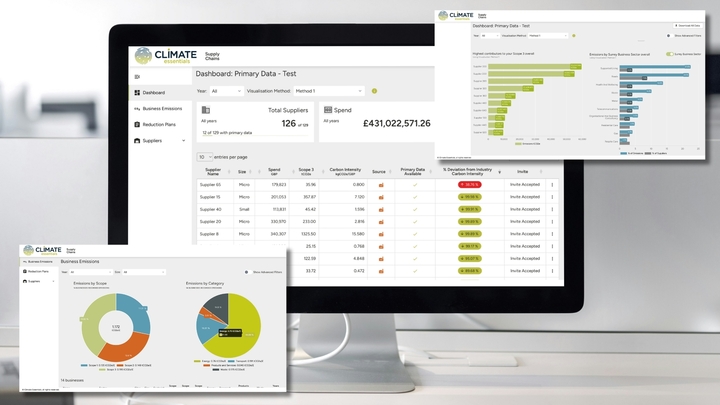
Through the Climate Essentials for Supply Chains platform, more than 250 suppliers were engaged to measure, track, and reduce their emissions. Suppliers were given access to user-friendly tools that simplified carbon measurement, generated tailored reduction plans, and identified key areas for improvement.
The results speak for themselves. Within the first reporting period, the initiative achieved a 30 per cent improvement in reported supply chain emissions, largely through more complete and accurate data feeding into Surrey's Scope 3 reporting.
Suppliers are now active participants in Surrey's net zero target. The project has fostered collaboration, transparency, and shared learning, creating a replicable model that other councils and organisations are already adopting.
To further scale the impact, suppliers can join the Climate Essentials Net Zero Community, a dedicated platform that helps them embed climate action into their everyday operations. The Community offers webinars, expert resources, and toolkits designed to upskill suppliers and build confidence in reducing emissions.
Supplier engagement is not just about compliance, it's about building long-term capability and resilience across the entire supply chain.
Decarbonising supply chains through data and community
The Surrey County Council programme illustrates a key truth, that climate action is a shared responsibility. It must be distributed across networks of buyers and suppliers, connected by data, accountability, and a shared ambition for progress.
At Climate Essentials, we make that collaboration accessible, replicable, and measurable. Our software supports organisations at every stage, from calculating emissions and developing reduction strategies to engaging suppliers and tracking progress over time.
For buyers, this means full visibility of Scope 3 emissions, enabling them to prioritise high-impact areas and quantify suppliers' progress towards net zero. For suppliers, it simplifies the process through step-by-step guidance, clear reporting, and practical tools to demonstrate progress to clients.
The result is a multiplier effect: one buyer's leadership can empower hundreds of suppliers to take climate action, creating collective momentum across entire industries.
As climate reporting standards converge and net zero targets become more ambitious, expectations for supply chain transparency will only grow. Organisations that act now, building data-driven relationships and embedding climate action into procurement, will not only meet regulatory demands but also lead the way towards a more sustainable, resilient future.
Martina Colman is head of climate science and engineering at Climate Essentials.
To discuss how Climate Essentials can help you tap into the decarbonisation potential of your supply chain, get in touch or read more here.
This article is sponsored by Climate Essentials.


