One of the key UN officials involved in the Copenhagen negotiations to agree a successor to the Kyoto Accord yesterday warned that the talks remain stalled, likening the long-running process to "walking in wet sand".
Speaking to the Reuters news agency, Michael Zammit Cutajar, Malta's climate change ambassador and chair of the Copenhagen working group on long-term co-operative action, reiterated fears voiced at the most recent UN meeting in Bonn that the talks were now well behind schedule.
He said the draft negotiating text was still more than 200 pages long, and that at a comparable stage of the negotiations to agree the original Kyoto deal, the text was down to about 30 pages.
"There are masses of text," he said on the sidelines of a World Climate Conference in Geneva. "That's something people can get their brain around. At 200 pages no one will read the whole thing."
He also revealed that the negotiating text remains short on concrete details and includes a huge range of proposals that are still being debated, such as plans for a global tax on aviation or mechanisms to fund forestry projects through carbon markets.
He argued that while negotiators were keen to delay the debate surrounding emissions targets and climate change funding as long as possible, there were still plenty of areas where they could deliver progress. "There are so many questions around money other than the sum: where are you going to get it from...who is going to manage it...who will be eligible for it?" he told Reuters.
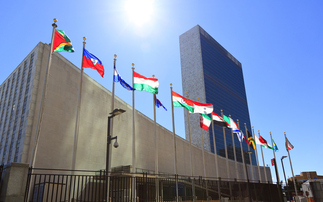
Echoing the recent assessment of the UN's top climate change official Yvo de Boer, Zammit Cutajar said the meeting of world leaders at a UN climate change conference in New York later this month was crucial to breaking the deadlock.
The news comes as UK energy and climate change secretary Ed Miliband launched something of a charm offensive on his trip to Delhi this week, praising the Indian government's efforts to promote low-carbon technologies and hailing the country as a potential "deal maker" at the Copenhagen talks.
In an interview with the Guardian, Miliband signalled his support for the Indian government's refusal to sign up to short-term binding emission targets as part of any Copenhagen deal, arguing that the country had demonstrated that it "took climate change seriously".
He added that the issue of when emissions from large emerging economies such as India and China would have to peak still needed to be resolved, but insisted that the Indian government was already attempting to accelerate the rollout of low-carbon technologies. "India has very stretching targets on solar energy, on renewable energy… it has big ambitions on energy efficiency… I think India wants to be a deal maker not a deal breaker in Copenhagen," he said.
Miliband's stance is in stark contrast to that of US secretary of state Hilary Clinton who, following a recent trip to Delhi, sparked accusations from the Indian government that the US was placing undue pressure on the country to accept emission targets.
UN's top climate change official warns negotiators are running out of time to resolve rows over targets and clean tech financing 11 Aug 2009
With the historic Copenhagen climate change conference fast approaching, the UN releases its first "real negotiating text" 20 May 2009
US insists that demands for emission cuts of between 25 and 40 per cent by 2020 remain unrealistic 01 Jun 2009
Friends of the Earth’s biofuels campaigner Kenneth Richter argues that biofuel targets are a distraction from tried-and-tested ways of reducing transport emissions 09 Feb 2010
Trewin Restorick wonders if the concept du jour of "nudging" behaviour change can help curb UK carbon emissions 08 Feb 2010
From feed in tariffs to vanishing top soil, we run down the top stories from the past week 08 Feb 2010