Climate change will increase health threats for billions of people globally over the course of this century, resulting in catastrophic humanitarian and economic impacts, as food and water shortages, extreme weather events and disease migration patterns become more severe.
That is the stark warning from a major new report by University College London and The Lancet, dubbed the " Stern Report for health", which argues that the health risks associated with rising global temperatures have been seriously underestimated.
Lead author, Professor Anthony Costello of the UCL Institute for Global Health, said that there was an urgent need to integrate health issues into the wider debate over the risks associated with climate change and the mitigation and adaptation strategies that will be required.
"The big message of this report is that climate change is a health issue affecting billions of people, not just an environmental issue about polar bears and deforestation," he said. "The impacts will be felt not just in the UK, but all around the world – and not just in some distant future but in our lifetimes and those of our children."
The report, which features input from a wide range of academics specialising in health, anthropology, geography, engineering, economics, law and philosophy, assesses the health implications of temperature increases of between two and six degrees over the course of this century.
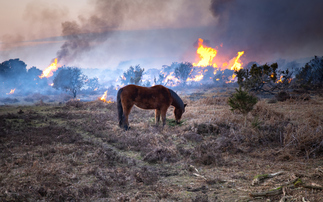
It warns that disease and mortality patterns will change as diseases such as malaria and dengue fever migrate out of the tropics and the incidence of heatwaves, such as the one that caused 70,000 deaths in Europe in 2003, increases.
It also warns that falling food yields as a result of droughts and changing climatic conditions could undermine poverty reduction efforts, putting billions of people at risk of food shortages.
"If we are going to get early changes in the next 20 or 30 years, falling crop yields could trigger more of an effect through rising food prices," said Costello. "Look at what happened last year when food prices rose globally. And one billion people currently have calorie-deficient diets – this situation will get worse as demand increases from India, China and other nations with a population boom."
In addition, the report predicts that the increased incidence of extreme weather events such as hurricanes will result in higher casualty rates, particularly as sea levels rise.
Costello said there was an urgent need for health to play a wider role in the climate change debate, and called for a major overhaul of global health systems to ensure the sector is better prepared to cope with inevitable levels of global warming.
The report highlighted the need for increased investment in preparing health services for climate change, warning that currently "many hospital facilities in industrialised countries lack experience in managing malaria", which is likely to become more prevalent, and that "extreme weather events are not always handled well by rich nations".
Costello also argued that there were strong health benefits associated with a low-carbon lifestyle that governments should do more to promote. "We must develop win–win situations whereby we mitigate and adapt to climate change and at the same time significantly improve human health and wellbeing," he said. " There are major health benefits from low-carbon lifestyles, which can reduce obesity, heart and lung disease, diabetes and stress."
EU-backed analysis of climate impacts warns of heatwaves, floods and rising insurance costs 17 Nov 2009
New report warns climate change is already affecting US through droughts, heat waves, storms and public health threats 17 Jun 2009
With 100 days to go until Copenhagen, new report slams official climate change costs estimates as woefully inaccurate 28 Aug 2009
Cameron presents pre-election energy policy, promising greater investment certainty for low-carbon projects, green loans for households, and streamlining of planning system 19 Mar 2010
Joint statement from carbon exchange and Hungarian government aims to restore confidence in CER market 19 Mar 2010
From climate change contrarians to the "KitKatastrophe" of Nestle's palm oil policy, we look at the best the green web has to offer this week 19 Mar 2010
From the government's plans for a marine energy revolution to John Lewis' proposals for an off-grid supermarket 19 Mar 2010