Pressure on businesses to curb carbon emissions over the next decade could intensify further after the Government confirmed it would aim to meet its new carbon budgets without resorting to the use of carbon offsets. It said it could set more demanding targets if an international climate change deal is reached later this year.
Unveiling the world's first carbon budget alongside his fiscal budget, Chancellor Alistair Darling pledged that the UK would cut carbon emissions by 34 per cent on 1990 levels by 2020.
The target is at the bottom end of that proposed last year by the independent climate change committee, but in a surprise move the Government said it would aim to take up the committee's recommendation that the targets be met through domestic emission reductions alone.
While the Chancellor reserved the right to buy carbon offsets to help meet the second of two five-year budgets running from 2013 to 2022, the Government insisted it would aim to avoid this scenario and would meet the first budget period up to 2012 without resorting to international carbon credits.
It also pledged to tighten the carbon targets should a "satisfactory" agreement be reached at the UN-backed international climate talks in Copenhagen later this year.
Energy and climate change secretary welcomed the new budgets, claiming they were "good for the environment, good for jobs and good for energy consumers". He also said the UK was already on track to meet its first five-year budget, which requires it to cut emissions 22 per cent on 1990 levels by 2012.
The Government said the Department of Energy and Climate Change and other key departments will publish a full Energy and Climate Change strategy this summer detailing how the new targets will be met.
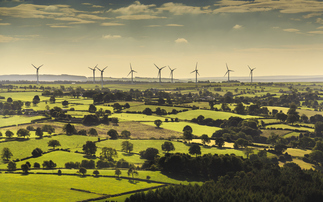
They are likely to require wholesale changes to large sections of the economy and the widespread adoption of low-carbon technologies such as wind turbines, carbon capture and storage and cleaner vehicles.
Any government failing to meet the targets will have to explain any shortfall to parliament and could find itself open to legal action. As such, Darling said the new budgets would give businesses the certainty they have been demanding that investments in low-carbon technology will deliver long-term benefits.
The new budget was unveiled alongside a raft of fresh green investment from the fiscal budget, focused on offshore wind, carbon capture and storage, building energy efficiency and emerging clean technologies.
Early reports had anticipated green investments of about £500m, but Darling surprised green business leaders with more than £1bn of new funding, including £165m in low-interest green business loans, as well as £4bn of financing from the European Investment Bank for green capital projects and more money for carbon capture and storage and offshore wind developments.
"In the context of significant tightening elsewhere in the budget, the sums made available for subsidies, loans, investment funds and capital allowances in energy efficiency and renewables can make a difference, and create many jobs," observed Jeremy Leggett, executive chairman at Solarcentury.
However, others were less impressed by the new carbon budgets with green groups arguing that the UK needs to deliver cuts of more than 40 per cent by 2020 if it is to make an equitable contribution to avoiding "dangerous" climate change, and some commentators argued that the collapse in industrial output as a result of the recession means that the first five-year budget up to 2012 will be easily met.
Offshore wind, carbon capture and green manufacturing are big winners as Chancellor vows to make UK the global leader in clean technology 22 Apr 2009
BusinessGreen.com runs down the key environmental measures from this year's budget as they are announced 22 Apr 2009
The great and the good of the UK's environmental sector offer their take on Alistair Darling's box of surprises 22 Apr 2009
Justin King announces funding to support green research projects at Imperial College London 16 Mar 2010
Head of World Business Council for Sustainable Development warns poor communication between politicians and private sector is blocking the development of effective green policies 16 Mar 2010
Andrew Williams casts his eye over some of the most popular green driving aids on the market 16 Mar 2010
From hydropower hot spots to record-breaking Texan winds, we run down the top stories from the past week 12 Mar 2010
Few debates cast the UK's business and political community in such an unedifying light as the never-ending row over skills.... 12 Mar 2010