The government moved to tighten its climate change bill still further last night, tabling amendments designed to extend the reach of the feed-in tariff and limit the extent to which carbon credits from overseas can be used to count towards UK emission targets.
The bill is now expected to receive its final vote this week and is on track to receive Royal Assent on 27 November, making the UK the first country to feature legally binding emission reduction targets on the statute book.
Green groups had expressed fears that the bill – which includes a recently upgraded target to cut emissions by 80 per cent by 2050 and incorporate aviation and shipping – would allow successive governments to meet the targets by buying large numbers of carbon offset credits from projects in the developing world, rather than focusing on action within the UK.
A number of peers, including Labour lords Whitty and Puttnam, and both opposition spokesmen on energy and climate change Lords Taylor of Holbeach and Lord Teverson, raised concerns about the role imported credits could play.
In a letter to a newspaper yesterday they warned: "Relying sufficiently on emission reductions which take place overseas could influence long-term investment decisions here in the UK, particularly in the power sector, locking the country into high-carbon economy for years to come, when the overwhelming need is to tackle climate change, develop clean technologies and benefit from the growth in green jobs."
However, in a surprise move the government last night acted to alleviate concerns over imported carbon credits, tabling an amendment that will allow the independent climate change committee to recommend a cap on the extent to which imported credits can count towards the target as part of their five-year carbon budgets.
"The bill makes it plain that we are committed to taking domestic action to cut emissions and the energy bill and the planning bill further underline that, " said a spokesman for the Department of Energy and Climate Change. "However, the government recognised there are concerns [about imported credits] and this amendment makes it clear that it is serious about tackling carbon emissions at home."
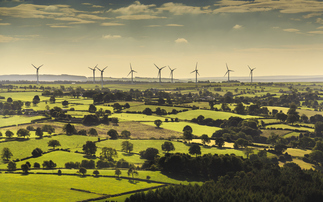
In another surprise move, the government also beefed up its plans for a feed-in tariff, increasing the size on installation that can sell energy to the grid at above-market prices from three to five megawatts.
The move was welcomed by Leonie Greene of the Renewable Energy Association, who said that it would make it easier for community-scale renewable energy projects to attract investment.
"Some community-scale projects found the administrative burden under the Renewables Obligation [funding scheme] pretty high, while they also found it difficult to get attractive power purchasing deals as they are so small compared to infrastructure projects," she explained. "Allowing these projects to access the feed-in tariff should make it easier for them to get good prices and that should help open them up to a wider range of investors who did not always understand the RO."
Miliband endorses climate change committee's recommendation and announces plans to introduce a feed-in tariff 16 Oct 2008
As climate change committee puts finishing touches to first wave of carbon budgets, chairman insist low carbon ambitions must not be diluted 27 Nov 2008
Conservatives set out plans to increase financial support for geothermal energy projects 15 May 2009
Engineering giant claims almost a third of its venture capital investment portfolio is focused on clean tech 10 Jul 2009
Energy giant shells out undisclosed sum for a pipeline of solar photovoltaic projects in the south of France 10 Jul 2009
From magnetic cars to rows over greenwashing, we run down the top stories from the past week 10 Jul 2009
Bill Beaver takes the microscope to the backroom deals that will shape the future of the US climate change bill 09 Jul 2009
Whenever a big story breaks about the dire straights in which the natural world finds itself, it always sparks something of a... 07 Jul 2009