David Cameron today released a new Conservative energy paper detailing plans for a feed-in tariff that would guarantee businesses and households an above market price for green energy sold back to the grid from micro-renewable technologies such as solar panels and small scale wind turbines.
Anyone with a certified low-carbon energy generating technology that delivers below 250kW of power will be eligible for the proposed scheme, which Cameron said would give "homes, public institutions and small businesses a new revenue stream".
He argued that the model, which has proven highly successful in Germany and several other European countries, would incentivise people and companies to invest in renewable energy technologies, secure in the knowledge they could sell back surplus green power at an attractive rate.
The Tories also moved to alleviate concerns that the scheme would prove expensive to energy companies, outlining plans for a central fund to cover the cost of paying micro-generators a premium for energy fed into the grid
"The supplier's net costs in paying for this tariff to the micro-generator will be met by a new Decentralised Electricity Fund to be established by the Treasury," the paper said. Cameron added that this fund would be financed by " abolishing existing ineffective grant schemes for micro generation".
Greater support for larger-scale decentralised low carbon energy generated by CHP plants, medium or large wind turbines and waste, biomass, solar or micro-hydro plants is also recommended in the Tory paper.
"We want to give business the incentive to meet their own electricity needs through establishing large-scale decentralised electricity generation capacity, " said Cameron. "We want to make it more attractive for new players to use that generation in order to enter local electricity and energy markets."
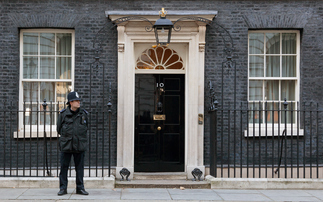
Greenpeace's John Sauven welcomed the proposals and urged the government to adopt the plans. "We've been pushing this climate change solution for many years so it's very exciting to have a major political party take our ideas and adopt them as policy," he said. "But we really want to see this as a government policy, no matter who's in Number Ten. Guaranteed higher prices for clean electricity have kick-started the green energy revolution in Europe - it's high time Britain joined in."
Wind, biomass and microgeneration to be big winners as government details wide-ranging investment and incentive package designed to meet EU renewables targets 23 Jun 2008
Government accused of badly mishandling low carbon buildings programme leading to a collapse in the number of households applying for grants to install microrenewables 15 Feb 2008
The government has signalled it will consider introducing a German-style Feed-in Tariff to promote adoption of onsite renewables as part of a major new green energy consultation 20 Feb 2008
Major new package of incentives designed to deliver tenfold increase in UK renewable energy capacity 26 Jun 2008
Focus on energy savings through fuel efficiency for homes and public and commercial buildings 04 Jul 2008
ActionAid accuses G8 of driving more people into poverty by pursing biofuels and cutting agri-aid 04 Jul 2008
Businesses' new found focus on the environment may be welcome, but according to Conrad MacKerron, it is taking attention away from workers' rights issues – and the credibility of the entire green business movement could be at risk 03 Jul 2008
It may be a year old, but as Dell's Jonathan Perry explains, firms looking to get rid of their old IT kit still need to pay attention to the WEEE directive 02 Jul 2008
Telling customers about your environmental targets is all well and good but, as Paul Thomas argues, they are meaningless if you do not know how they are to be achieved 01 Jul 2008