What the right and the greens have in common

Thomas Friedman's Hot, Flat and Crowded offers a compelling argument that national- and self-interest can drive green actions just as much as liberal ideals

By Tom Young 22 Dec 2008

The cover of Hot Flat and Crowded
Verdict

Price: £ 20

Rating: N/A

Thomas Friedman's latest offering Hot Flat and Crowded is an admirable attempt to drag the environmental agenda out from its long-term comfort zone in the political left into the centre – and even right of centre.

The high-profile New York Times columnist and author of business exec favourite The World is Flat, is fully aware that the environmental agenda is viewed with suspicion by much of the corporate community and the public in the US – a situation only made more acute by the current financial crisis.

Consequently, he seeks to disconnect environmental concerns from their hippy connotations and argues forcefully that environmentally responsible behaviour should be driven by national- and self-interest.

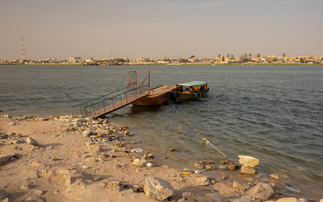
Friedman argues, for example, that the flow of oil money from the US to Saudi Arabia – the second biggest exporter of oil to the US after Canada – is directly financing what he calls a "petro-dictatorship", which in turn funds the strict conservative form of Sunni Islam known as the Wahabi sect that he claims funds schools which breed terrorists.

Friedman also cites an article he wrote for Foreign Policy magazine which notes that freedom of the press, civil liberties, and democracy are often inversely proportional to the amount of oil a country exports, citing Russia, Iran and Venezeula as examples.

Hot, Flat and Crowded contends that the sooner these countries are forced to diversify their economies - ideally through reduced demand for oil - the less pronounced the threat of international terrorism will become.

If the link between oil and terrorism is too tenuous to drive a concerted effort to curb oil demand, Friedman argues there are also compelling economic reasons for the US to reassess its relationship with the black stuff.

He cites evidence that key blue-collar manufacturing jobs have already been lost overseas because green incentives in other countries, particularly Germany, are encouraging US clean tech firms to relocate.

And China – the great US economic rival of the 21st century – is ramping up its low-carbon strategy faster than people realise, according to Friedman, meaning that if the US does not get its act together, it will lose its chance to lead the world on what will be the defining issue of the next 50 years.

Nothing like a bit of patriotism to get the right onside.

My favourite argument however comes fairly early in the book – perhaps Friedman is concerned the right wing audience he is trying to reach may quickly become bored - when he warns that the loss of biodiversity already happening in the US will mean moose and elk may became extinct and thus unavailable for hunting.

The book is awash with buzzwords – the "energy climate era", " petro-dictators" and of course the ubiquitous "hot, flat and crowded", referring to the state of the earth – that serve to give it the feel of a self-help book but, in a way of course, that is exactly what it is.

But despite the easy-to-read style, Hot, Flat and Crowded makes a number of complex points and, in particular, offers three searing investigations that should be required reading for every green business executive.

The first describes how utilities in the US have evolved to produce a wasteful system and how energy companies should be incentivised to make their customers conserve energy.

The second extensively describes the home of the future – complete with electric car hooked up to an energy internet, which monitors individual appliances and regulates electricity power use according to the price of electricity.

The third is a fascinating and detailed chapter on China, which although constantly painted as the villain of climate change because of its reliance on coal power, is actually doing as much as any country to bolster its renewables capacity.

But Friedman is wary of adopting too serious a tone for fear of alienating those who may be flirting with his brand of self-interested environmentalism, rather than already being on board with it. As such, he ends on a cautiously optimistic note – citing US scientist Donella Meadows' famous line, who when asked if we have enough time to prevent environmental catastrophe would always say: "We have exactly enough time - starting now."

READERS COMMENTS Add your comment

display:none

Greg Barker has said that despite cuts to solar incentives the industry will continue to grow this year - is he right?

8%

7%

9%

76%

INSIGHT

Submit your email address and we'll send a link to a personal newsletter control panel


Hardware Engineer / Electroni

10 Feb 2012

Hardware Engineer FPGA,VHDL,Embedded C,PCB Layout,Orcad My client a leading design and manufacturing company is looking for an experienced hardware engineer, electronic engineer. This forward thinking organisation will create ample opportunities for the right Hardware electronics engineer. The Hardware Engineer will design, implement, evaluate and verify complete data acquisition systems and the s

APC

Guidelines for specification of data centre power density

The science and practical application of an improved method for the specification of power and cooling infrastructure for data centres

Quocirca

Powering the data centre

A look at alternative approaches to managing energy for cost and/or sustainability reasons in data centres