Do we need Copenhagen?

If Copenhagen is the meeting to save the world, what happens if the talks collapse?

By James Murray

16 Sep 2009

Comments: 2

James Murray

It is much worse than we first thought. For months the deeply worrying question hanging over the Copenhagen process has been whether or not the long running talks to agree an international climate change deal would deliver a treaty to give us even a fighting chance of avoiding runaway climate change. But following the flurry of bad news emanating from the US this week, it looks like even that rather distressing question was naively optimistic. It should have been: are we going to get a deal at all?

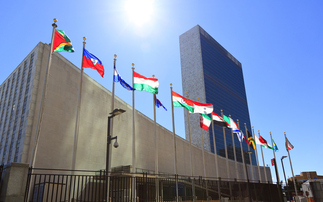
It is no exaggeration to say that, as the UN headquarters in New York prepares to host a make or break meeting of over 100 world leaders intended to kick start the stalled Copenhagen negotiations, the entire process is hanging by the thinnest of threads.

As previously discussed, the gap between the emission reduction targets recommended by climate scientists and demanded by poorer nations and those proposed by industrialised countries already looks unbridgeable. But now we have to add into the mix the prospect of the Copenhagen talks collapsing altogether. Scaremongering? Not when you consider that with a little over two months to go the negotiations are now firmly on track for the worst case scenario.

If Democrat senate majority leader Harry Reid is right and the vote on the (arguably inadequate) Waxman-Markey bill is kicked into the long grass of 2010, and if the Guardian's front page exclusive this morning is accurate and the US negotiators really reckon that a complete re-writing of the Kyoto framework is the only way to get any agreement ratified by Congress, then the US is going to turn up in Copenhagen brandishing commitments so weak that China, India, Russia and co will almost certainly refuse to sign up.

Ban Ki-moon speaks hopefully of the world's leaders coming together next week and recommitting themselves to meaningful action, but the problem is that the people who hold the future of the Copenhagen Treaty in their hands will not be there.

The Obama administration 'gets' climate change, they understand the risks and opportunities, but they also knows there is no value in it signing up to a deal that will not be accepted by Congress.

The President can take the floor in Copenhagen and deliver a speech to make Kennedy and Churchill proud, but he is never going to convince those on the US right who are at best sceptical about measures to tackle climate change and at worst downright hostile to everything he may say. Whether motivated by fiercely partisan party politics, short term economic concerns, a belief that climate change is not happening or (if you believe Jimmy Carter) old fashioned racism, there are powerful constituents within the US who will do everything they can to scupper an international agreement backed by virtually every other nation on the planet. Moreover, the Republican Party and those Democrats more concerned about their own mid-term electoral prospects than something as trivial as planetary apocalypse seem entirely happy to do their bidding.

There is still an outside chance that the administration could agree to a deal which is just about ambitious enough to secure support from the rest of the key players and then somehow cobble together the votes it needs to get it ratified, but the odds are lengthening by the day.

So, what now? If Copenhagen really is the "meeting to save the world" is the planet now doomed?

Well, let us be in no doubt that failure to get a deal will make tackling climate change an order of magnitude harder. Even with a robust international deal built around binding emission targets, a meaningful price on carbon and huge investment in clean technologies it seems extremely unlikely that greenhouse gas emissions will reach their peak by 2015 – the minimum requirement that climate scientists reckon is needed to give us a reasonable chance of limiting temperature rises to around two degrees. Without an international deal ensuring emissions peak over the next few years, this requirement starts to look downright impossible.

Many countries will continue with the successful transition to a low carbon economy, but without international rules some countries will inevitably set themselves up as "carbon sweat shops" for the world's most polluting industries, while the funding necessary to help emerging countries develop along low carbon lines will be hugely diminished. In addition, without a clear price on carbon emissions investment in coal-fired power plants and other carbon intensive infrastructure will continue largely unabated, locking countries into 40 odd years of high emissions, by which point it will be too late to do anything other than man the lifeboats.

And yet, despite the increased risk that we are locked on a path that guarantees catastrophic temperature rises of three, four or even six degrees by the end of the century, failure to agree a deal in Copenhagen would not necessarily mean the beginning of the end.

Even if the talks collapse, the EU is not about to abandon its wide ranging climate change programme, nor are China, India, South Korea, Australia, the United Arab Emirates, Mexico and all those other nations committed to increasing investment in low carbon technologies, reducing emissions and improving their energy security. This includes the US, where Obama has already committed billions of dollars to the clean tech sector and has a legislative trump card up his sleeve in the form of the Environmental Protection Agency's decision that it can regulate carbon emissions under existing laws. Meanwhile, even if they fail, the UN talks would inevitably reconvene in 2010 to deliver a deal on the less contentious aspects of the Copenhagen negotiations surrounding carbon trading and forestry protection.

Without a Copenhagen deal everything will become much more confused as a patchwork of different regulations and investment climates emerges. But fears over global warming and energy security will not disappear, and as a result investment in clean technologies will continue to grow at a rapid pace, the carbon market will continue to expand into new territories, commodity shortages will continue to drive up prices, and demand for green products and services will continue to climb. Even without an international agreement, the case for more sustainable business models remains remarkably robust.

Under this scenario it is still possible (and, if you are feeling optimistic, probable) that the portfolio of green technologies we need to decarbonise our economies will emerge. Remember, solar energy experts reckon they can produce solar panels that are more cost effective than coal-fired power by 2013, while it is Germany and France with their progressive environmental policies that have been the first major economies to exit recession. Meanwhile, it is the Japanese auto manufacturers with their investments in fuel efficiency that nearly destroyed the US car industry and it is those clean tech firms in Silicon Valley that offer the one of the few bright spots in the otherwise moribund US economy.

Progress may still be too slow to head off potentially dangerous levels of global warming, but, if over the next five years technologies emerge that are superior to the carbon intensive they aim to replace, then deep emission cuts will become not just possible but inevitable. Equally, if it becomes apparent that those economies leading the way to a low carbon future are outperforming their rivals then it will be countries such as the US that will end up leading the calls for an international climate deal.

It might be a long shot and it may be dependent on far too many ifs when you consider what is at stake, but given the current state of the Copenhagen talks it may be the best we can hope for.

WHAT DO YOU THINK? Add your comment


Greg Barker has said that despite cuts to solar incentives the industry will continue to grow this year - is he right?

2%

6%

7%

85%

INSIGHT

Submit your email address and we'll send a link to a personal newsletter control panel


Mechanical Integrity Engineer

09 Feb 2012

Mechanical Integrity Engineer, 35,000-45,000, Midlands A global power organization are looking to identify a Mechanical Integrity Engineer to become part of a globally accalimed engineer department. Delivering R&D Projects in relation to the business' GAS and Steam Turbine operations - the role will challenge the engineers mechanical design capabilities and integrity of company products. The succe

APC

Guidelines for specification of data centre power density

The science and practical application of an improved method for the specification of power and cooling infrastructure for data centres

Quocirca

Powering the data centre

A look at alternative approaches to managing energy for cost and/or sustainability reasons in data centres