22 Jun 2010
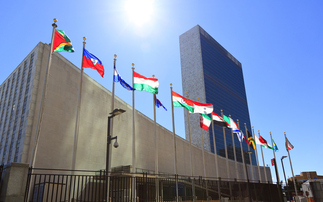
I am in New York this week to launch the largest CEO study of its kind on corporate sustainability to date, conducted by the UN Global Compact and Accenture Sustainability Services. Nearly 1,000 CEOs, business and civil society leaders have contributed to this landmark study.
Our survey finds that commitment to environmental, social and governance issues is exceptionally strong: 93 per cent of CEOs see sustainability as critical to their company's success. It is clear that there has been a fundamental shift in mindsets since the last survey in 2007. Then, sustainability was starting to reshape the rules of global business. Now, it is truly a strategic priority for CEOs around the world.
The number one development issue that CEOs highlighted as important to their future success was education - at the level of education systems, but also future talent supply and sustainability skills.
Climate change followed in second place, with CEOs increasingly believing that responding to climate change is not only a means of managing risk but also an opportunity for growth, capitalizing on the growing demand for products and services that address environmental concerns.
For example, Royal Philips Electronics realised revenues of €7.2bn (US$8.7bn) in 2009 from its green product line - nearly one-third of its total revenues in that year. Similarly, in 2009 Siemens generated revenues of €23bn (US$28bn) from its environmental portfolio of products and services, an 11 per cent increase from 2008 and also nearly one-third of Siemens' total annual revenues.
CEOs also told us that their approaches to sustainability are changing. They identified the consumer as the most important stakeholder, driving companies to take action in response to new attitudes and needs. New technologies are providing new solutions, as well as challenges - particularly from social media. Partnerships (e.g. with NGOs) are increasingly par for the course for most businesses. And post-financial crisis, CEOs recognise a critical role for sustainability in rebuilding trust with stakeholders. Seventy-two per cent of CEOs highlighted "brand, trust and reputation" as the key motivation for taking action on sustainability.
Despite recent progress, CEOs believe they are still facing many challenges.
Externally, there is uncertainty surrounding the support from the investment community; the extent to which sustainability concerns will drive consumer purchasing decisions; and the lack of clear and effective regulation.
Internally, CEOs recognise that there is currently an execution gap in meeting their ambition to embed sustainability within their organisations, particularly in supply chains and subsidiaries. For example, 88 per cent of CEOs believe they should be integrating sustainability through their supply chain, but only 54 per cent believe this is being achieved in their company. A similar performance gap is seen for subsidiaries.
In order to overcome these challenges, CEOs believe they can take a leadership role in bringing about a number of "must-have" conditions:
• Shaping consumer and customer attitudes to build a stronger market for sustainable products and services.
• Developing new skills, knowledge and mindsets so that businesses have the capabilities to manage sustainable development.
• Engaging proactively with the investor community to communicate the impact of sustainability activity on core business metrics.
• Embedding new concepts of value and performance management that encompasses both the positive and negative impacts of a business on society.
• Shaping a clearer and more positive regulatory environment for sustainability.
Our findings highlight that companies are taking the long view on sustainability. They realise that the journey will not necessarily be short. B ut, arguably, the modern era has never before seen such a high level of executive commitment to the environmental, social and corporate governance agenda. Many leading companies are aware of the power they have to change the world – but acknowledge that this is "the end of the beginning" and not "the beginning of the end" in the transition to a new era of sustainability.
LATEST STORIES ABOUT LEGISLATION
YOU MAY ALSO LIKE
LATEST JOBS
TODAY'S TOP STORIES
HIGHLIGHT
The best green companies in the UK should be preparing their entries for annual BusinessGreen Leaders Awards
INSIGHT
INSIGHT
The science and practical application of an improved method for the specification of power and cooling infrastructure for data centres
A look at alternative approaches to managing energy for cost and/or sustainability reasons in data centres
WHAT DO YOU THINK? Add your comment