Japan shines on Pacific nations with $20m solar grant

Cool Earth Partnership fund to facilitate solar installations

By Yvonne Chan in Hong Kong

30 Oct 2009

Be the first to comment

Tropical beach

Japan will provide US$20m to fund solar projects in the Pacific island nations of Palau, Tonga, Marshall Islands and the Federated States of Micronesia, under the country's flagship climate funding initiative.

Noboaki Yamada, a Japanese embassy official in the Marshall Islands, told the Pacific Islands News Association that Japan's Cool Earth Partnership programme would provide each of the nations with a share of the $20m funding, although he did not reveal how it would be distributed.

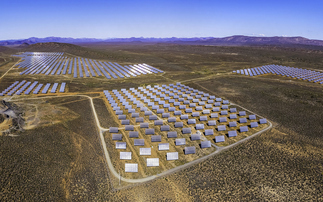
The Marshall Islands said it will use its portion of the grant to install a 200kW solar installation on the roof of Majuro Hospital, which will feed electricity into the power grid for Majuro City – the nation's capital.

Marshall Islands government officials had requested a solar installation with a 1MW capacity – equal to 10 per cent of Majuro's power needs, according to Yamada. However, he said the cost of training solar maintenance workers had reduced the amount of funding that could be spent on panels.

The solar rooftop is intended to reduce Marshall Island's reliance on imported diesel – the nation's main source of fuel.

Japan has not yet announced the solar developments planned for Palau, Tonga and Micronesia.

The Cool Earth Partnership scheme was established by Japan last year, with the aim of providing US$10bn to developing nations by 2013 in a bid to reduce emissions and mitigate climate change.

The Pacific Islands have emerged as high-profile players in the on-going Copenhagen climate change negotiations, as rising sea levels have put several nations under threat of being completely submerged. They have called on developed nations to take broad measures to combat global warming, thought to be a major force behind increasing sea levels, and have also pioneered a number of low-carbon initiatives designed to demonstrate that economies can function successfully while delivering deep cuts in greenhouse gas emissions.

For example, in July Tuvalu set a target of having all its energy needs provided by renewable resources by 2020. The tiny island nation last year installed its first large-scale solar array through an initiative led by two Japanese utilities, and is now counting on help from the US and Italian governments to develop solar power projects on its outer islands.

WHAT DO YOU THINK? Add your comment


Greg Barker has said that despite cuts to solar incentives the industry will continue to grow this year - is he right?

8%

7%

8%

77%

INSIGHT

Submit your email address and we'll send a link to a personal newsletter control panel


Hardware Engineer / Electroni

10 Feb 2012

Hardware Engineer FPGA,VHDL,Embedded C,PCB Layout,Orcad My client a leading design and manufacturing company is looking for an experienced hardware engineer, electronic engineer. This forward thinking organisation will create ample opportunities for the right Hardware electronics engineer. The Hardware Engineer will design, implement, evaluate and verify complete data acquisition systems and the s

APC

Guidelines for specification of data centre power density

The science and practical application of an improved method for the specification of power and cooling infrastructure for data centres

Quocirca

Powering the data centre

A look at alternative approaches to managing energy for cost and/or sustainability reasons in data centres