Budget 2009 - The green business reaction

The great and the good of the UK's environmental sector offer their take on Alistair Darling's box of surprises

By James Murray

22 Apr 2009

Comments: 3

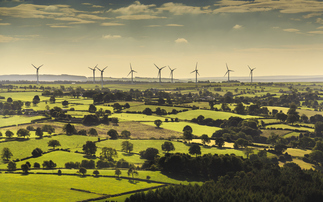
Wind turbine

Tom Delay, chief executive, The Carbon Trust

"This budget is good news for carbon reduction. The Government announcement today to provide the Carbon Trust with an extra £165 million of interest free loans to be made available to business and the public sector to expand existing energy efficiency programmes is most welcome... [It] represents a four-fold increase in our current loans programme for the public and private sector. Overall it will cut £40 million from the UK's annual energy bill and deliver a quarter of a million tonnes of additional carbon dioxide savings a year."

Stephen Hale, director, Green Alliance

"This is only a small step for mankind, but it is a big leap for HM Treasury. This Budget contained much more than an abysmal Pre-Budget report. But there's a very long way to go. There are a daunting backlog of issues that need resolution now in order to sustain the government's claim that it is finally delivering on their rhetorical commitment to the low-carbon economy. Other countries, notably the US, have done more in recent months."

Lisa Harker, Co-Director, Institute of Public Policy Research

"In terms of the environmental measures, the Government’s commitment to support up to four Carbon Capture and Storage projects is a big step forward: it now needs to set out rapidly how these projects will be funded and delivered. The Government has also signed up to an ambitious emissions reduction target for 2020 and has made a welcome commitment to being a world leader in low carbon technologies. However, this scale of ambition is not matched by the level of new investment in low carbon development that will result from this budget – particularly in relation to what other leading countries are doing."

Jeremy Leggett, Executive Chairman, Solarcentury

"This budget gets us on the road with a green new deal in the UK. In the context of significant tightening elsewhere in the budget, the sums made available for subsidies, loans, investment funds and capital allowances in energy efficiency and renewables can make a difference, and create many jobs. Industry and government now needs to pull together to execute. We have some catching up to do."

Philip Wolfe, Director General of the REA

"The economic storm clouds are clearly thundering through this budget, but at least they have a green lining. We are glad the government has sought to respond to areas we identified as critical and these measures should help prevent contraction in the renewables industry."

David Symons, Director at WSP

"This first carbon budget – covering the period 2008 to 2012 - has limited ambition and is set at a level that the UK should already be able to meet with ease. This means that long term carbon targets continue to be aspirational, and the really tough decisions on moving to a low carbon economy continue to be put off to the future. The first carbon budget commits the UK to emit no more than 3,018 million tonnes of CO2 equivalent gases over the five years between 2008 and 2012. This equates to around 600 million tonnes CO2e for each of the five years. The UK emitted 637million tonnes of CO2e gases in 2007 – a 1.7 per cent reduction on 2006. The 2008-2012 budget will be met if the UK continues this 1.7% per year carbon reduction – a reduction achieved in a growing economy and before the major stimulus of today's budget have been announced."

Ben Warren, head of renewable energy at Ernst & Young

"The Chancellor's announcement to provide additional incentives to support the development of offshore wind farms in the UK will be welcomed by industry. But the government has placed a big bet on an industry that is still in the early stages of development. And the stakes are high, not only does offshore have a large role to play in the UK meeting its renewable energy targets, but it also has the potential to provide long term sustainable employment in terms of marine construction and maintenance services. Whether the level of support is enough and the money will filter through to benefit UK plc is as yet uncertain, however after many months of positive sounds emanating from Whitehall, firm action is welcome."

National Grid, Chief Executive, Steve Holliday

"CCS has the potential to bring about a massive reduction in the UK’s carbon dioxide emissions, and at the same time play a big part in keeping our energy supplies secure...The next step for Government is to focus on how the carbon dioxide will get from the power stations to the offshore storage fields. CCS clusters – power stations in the same area sharing a pipeline network – make simple common sense compared to the wasteful alternative of each power station building their own separate pipeline. National Grid is keen to deploy its gas pipeline expertise in this area, but it needs the right regulatory framework."

WHAT DO YOU THINK? Add your comment


Greg Barker has said that despite cuts to solar incentives the industry will continue to grow this year - is he right?

8%

7%

8%

77%

INSIGHT

Submit your email address and we'll send a link to a personal newsletter control panel


Hardware Engineer / Electroni

10 Feb 2012

Hardware Engineer FPGA,VHDL,Embedded C,PCB Layout,Orcad My client a leading design and manufacturing company is looking for an experienced hardware engineer, electronic engineer. This forward thinking organisation will create ample opportunities for the right Hardware electronics engineer. The Hardware Engineer will design, implement, evaluate and verify complete data acquisition systems and the s

APC

Guidelines for specification of data centre power density

The science and practical application of an improved method for the specification of power and cooling infrastructure for data centres

Quocirca

Powering the data centre

A look at alternative approaches to managing energy for cost and/or sustainability reasons in data centres