Coal on the slide as renewables top 11 per cent of US power mix

As a raft of states pass new legislation demanding increased renewables capacity, new figures confirm green power now accounts for over a tenth of US energy

By Cath Everett

20 Jul 2009

Be the first to comment

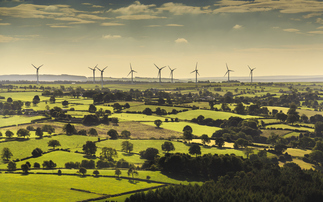
Wind farm

The renewable energy revolution under way in the US appears to be gathering pace according to new figures from the Energy Information Administration suggesting that zero carbon energy sources are successfully replacing fossil fuel-based forms of energy production.

According to the Administration's July Electric Power Monthly report, green energy generation accounted for 11.1 per cent of total electricity production in the country between April 2008 and 2009.

Input from hydroelectric sources rose 18.4 per cent to make up seven per cent of the total, while other renewables such as solar, wind, biomass and geothermal sources now account for 4.1 per cent. Wind power was the biggest success story in the renewables sector with net generation increasing by over a third.

The figures compared with a 13.9 per cent fall in coal-fired generation, although it still provided 46.1 per cent of the US' electric power and remains the biggest single source.

Overall, however, net electricity generation in the country fell by 5 per cent over the year as industrial production slumped by 12.5 per cent, according to data from the Federal Reserve.

The figures will provide a further boost to the booming US renewables sector, which is flush with Federal funding from President Obama's economic stimulus package and has seen growing numbers of states pass legislation requiring that a larger proportion of energy comes from low carbon sources.

Last week, for example, Kansas and West Virginia both adopted legislation for the first time that mandates the use of renewable energy.

Kansas now requires state utilities to meet 10 per cent of their peak demand using such sources by 2010, rising to 15 per cent by 2019 and 20 per cent by 2020 - although some of the requirement can be met by purchasing renewable energy credits.

Utilities can also try to hit targets by harnessing the renewable power generated by customers. To do so, they need to make it easy for domestic sources to connect to the grid and introduce reliable metering systems. As part of the legislation, all vehicles and buildings owned or leased by Kansas must now also meet agreed energy-efficiency standards.

West Virginia, which is a coal state, has likewise introduced a new credits-based system for renewable energy and coal-based "alternative" energy sources, such as carbon capture and storage. It will require electricity generating companies to use such credits for at least 10 per cent of their retail sales by 2015, increasing to 15 per cent by 2020 and 25 per cent by 2025.

And the legislative blitz continued in Maine and Nevada. Maine is now providing a 50 per cent additional credit for utilities supporting community-based renewable energy projects, while Nevada has increased its renewable energy targets from a flat 20 per cent by 2015. It now wants to see such sources accounting for 22 per cent of electricity production by 2020 and 25 per cent by 2025.

Pennsylvannia, meanwhile, has just announced a $23 million pot to boost the state's solar industry as part of its bid to become a centre of clean tech manufacturing in competition with other industrial areas such as Michigan and upstate New York. The move adds to an existing $650 million fund for green energy projects that was set up in July 2008, but also includes new tax and job training incentives to encourage industry to move to the region.

WHAT DO YOU THINK? Add your comment


Greg Barker has said that despite cuts to solar incentives the industry will continue to grow this year - is he right?

4%

7%

8%

81%

INSIGHT

Submit your email address and we'll send a link to a personal newsletter control panel


Mechanical Integrity Engineer

09 Feb 2012

Mechanical Integrity Engineer, 35,000-45,000, Midlands A global power organization are looking to identify a Mechanical Integrity Engineer to become part of a globally accalimed engineer department. Delivering R&D Projects in relation to the business' GAS and Steam Turbine operations - the role will challenge the engineers mechanical design capabilities and integrity of company products. The succe

APC

Guidelines for specification of data centre power density

The science and practical application of an improved method for the specification of power and cooling infrastructure for data centres

Quocirca

Powering the data centre

A look at alternative approaches to managing energy for cost and/or sustainability reasons in data centres