09 Dec 2008
Legal experts have today downplayed the immediate risk presented by climate change-related litigation against carbon intensive firms, but warned that such legal action remains highly plausible in the long term.
Myles Allen, a physicist and climate change expert at Oxford University, warned this week that improvements in climate computer models mean it will soon be possible to quantify the extent to which manmade greenhouse gas emissions contributed to extreme weather events, raising the prospect of victims being able to successfully sue heavy emitters.
Speaking to The Guardian newspaper, Allen said that advances in climate change science could soon be used to underpin legal action against the most carbon intensive industries.
"We are starting to get to the point that when an adverse weather event occurs we can quantify how much more likely it was made by human activity," he told the paper. "And people adversely affected by climate change today are in a position to document and quantify their losses. This is going to be hugely important."
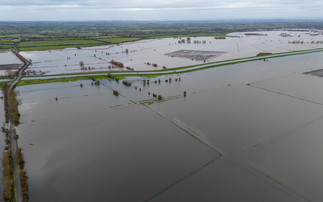
Allen's team previously undertook research claiming that global warming had at least doubled the risk of deadly heatwaves, such as that experienced during the 2003 European summer, and is poised to publish a new study assessing the extent to which manmade climate change contributed to UK floods in 2000.
"We can work out whether climate change has loaded the dice and made extreme weather more likely. And once the risk is doubled, then lawyers get interested, " he said.
However, legal experts advised that such cases remained hypothetical and that changes in the law would likely be required if there are to prove successful.
Speaking to BusinessGreen.com, Ben Holland, head of energy disputes at law firm Cameron McKenna, said that successful litigation was unlikely under current UK law.
"Cases such as this are a way off yet," he said. "Under UK law you have to prove that someone's activity has caused you harm and proving that conclusively with a flood, for example, would be very difficult."
However, he warned that while successful litigation remained unlikely it was not entirely implausible, noting that the House of Lords had recently changed the law governing some forms of workplace illness so that a company could be liable for contributing to a worker's poor health even if the harm could not be specifically linked to them.
"Anything that can prove that manmade emissions are causing loss of life or damage to property could still be important," he said. "The House of Lords has been prepared to change the normal rules on causation… if it was felt to be denying people justice the law could yet evolve."
He added that even without such changes firms would be advised to keep a close eye on developments in climate change litigation.
"It is such a fast moving area that it is a bad idea to be completely blind to the risks," he said. "We might be a long way off a successful case being brought, but even if a case were struck out immediately it would still make headlines – I'd be surprised if the bigger oil firms weren't already considering that risk."
A spokesman for BP said the company did not comment on hypothetical legal action, but confirmed that while the risk of litigation arising from climate change-related issues was not referenced in the company's latest annual report it did review business risks every year and make a judgement on whether to set aside a provision to cover any new risks.
Experts agreed that while the chances of litigation in the UK remained slight, firms operating internationally could be more likely to face legal action, particularly in the US where class action law suits have a long history of success against heavy polluters.
"In the UK they'd be huge problems legally constructing this type of case, but there is definitely more potential for it in the US where courts seem more open to hearing these types of cases," observed Steven Mackin, partner at law firm Eversheds. "If you look at the fact the US is at the forefront of polluter pays legislation, where companies polluting a beach, for example, not only have to pay for clean up costs, but also for perceived losses relating to people not being able to use the beach, then there is more risk there."
LATEST STORIES ABOUT CLIMATE CHANGE
YOU MAY ALSO LIKE
LATEST JOBS
TODAY'S TOP STORIES
HIGHLIGHT
Solar sector warns proposed cuts to feed-in tariffs would make it impossible for them to deliver promised rates of return
INSIGHT
INSIGHT
The science and practical application of an improved method for the specification of power and cooling infrastructure for data centres
A look at alternative approaches to managing energy for cost and/or sustainability reasons in data centres
WHAT DO YOU THINK? Add your comment