26 Jan 2009
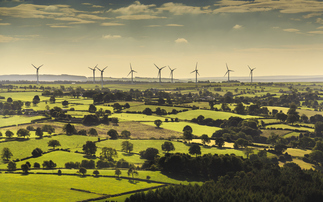
The government has today released a comprehensive environmental study of the UK's coastal waters, which concludes that there is scope for between 5,000 and 7,000 offshore wind turbines to be installed without an adverse impact on the marine environment.
The study – which forms part of the Department of Energy and Climate Change's Offshore Energy Strategic Environmental Assessment (SEA) – is based on more than a year's research into the potential for offshore wind, oil and gas licensing and offshore gas storage, including analysis of seabed geology, surveys of sea birds and marine mammals, and assessments of the impact of development on other marine industries such as shipping and fishing.
The report, which is now open for public consultation, provides a major boost to the government's so-called Round Three plans to lease out offshore zones capable of supporting wind farms with 25GW of capacity, concluding that "there are no overriding environmental considerations to prevent the achievement of the programme."
Energy and climate change secretary Ed Miliband welcomed the new report, hailing it as a "real advance in our understanding of the ecology and geology of the UK marine environment". He added that the study would now help ensure that "projects such as wind farms are built in the most suitable places, [while] also protect[ing] the natural environment".
The British Wind Energy Association (BWEA) said the report's conclusion that there are "no overriding environmental considerations" to halt the Round Three developments would provide a major confidence boost to developers who have until March to table their bids for leases with The Crown Estate.
"We knew there was the space for the programme and now we know it can co-exist with the marine environment," said the BWEA's Nick Medic, adding that the report also sent a "subtle but powerful" message to developers that it should prove difficult for opponents to block planning permission for offshore developments on environmental grounds. "This gives developers a pretty powerful weapon when pursuing their [planning] applications," he explained.
David Socha, business development director of utilities at Logica said large scale energy storage needed to be developed hand in hand with wind capacity.
"Without large-scale energy storage, almost no amount of wind power could ever provide stable enough base load to meet a country’s energy needs," he said.
"Solving this problem is an essential step towards the eventual phasing out of all fossil fuel power plants."
LATEST STORIES ABOUT LEGISLATION
YOU MAY ALSO LIKE
LATEST JOBS
TODAY'S TOP STORIES
HIGHLIGHT
The best green companies in the UK should be preparing their entries for annual BusinessGreen Leaders Awards
INSIGHT
INSIGHT
The science and practical application of an improved method for the specification of power and cooling infrastructure for data centres
A look at alternative approaches to managing energy for cost and/or sustainability reasons in data centres
WHAT DO YOU THINK? Add your comment