07 Dec 2009
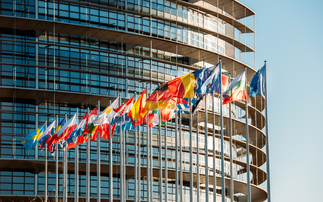
Political and business leaders were today urged to prepare for a significant strengthening of Europe's climate change strategy, as speculation mounted that they could approve an upgrade of EU-wide emission targets at the climate change summit in Copenhagen.
The EU has a target of cutting greenhouse gas emissions by 20 per cent on 1990 levels by 2020. However, it has repeatedly said that it will increase the target to 30 per cent if a sufficiently ambitious international deal is agreed at Copenhagen.
The EU has not set out the precise conditions under which it will judge any deal a success and upgrade its own targets, but observers predict that it will come under intense pressure to shift its position over the next fortnight and several experts are predicting the 30 per cent target could be adopted at a meeting of EU leaders later this week.
"There's very little doubt in my mind that the EU will move to 30 per cent," said Craig Bennett of the Corporate Leaders Group on Climate Change. "I'd expect the EU Council meeting later this week to tell negotiators at Copenhagen that they can agree to a 30 per cent target if a handful of conditions are met."
Failure to table the more ambitious target could see the EU compromise its position as a leader on climate change policy, according to Damian Ryan, senior policy analyst at the Climate Group. "The 20 per cent target is below the minimum 25 per cent target called for by scientists," he observed. "Now more and more of the developing countries are announcing emission targets, the EU will come under huge pressure to go to at least 25 per cent and ideally 30 per cent. "
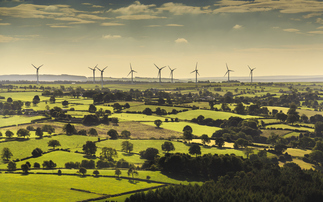
Any upgrade of emissions targets would have huge implications for both the EU and the UK's low-carbon transition plans – a fact being largely ignored by businesses and civil servants, according to Bruce Duguid, head of investor engagement at the Carbon Trust. "If there is a deal, the UK's 2020 emission target would have to change from 34 per cent cuts to 42 per cent cuts," he observed. "That would mean a sea change in what we are doing with renewables. The transition plan already requires about 33GW of energy to come from offshore wind by 2020, which translates as two new turbines a day."
Bennett agreed that businesses and governments were largely unaware of the extent to which more ambitious targets would have to translate into an acceleration, and in many cases a rewriting of low-carbon plans and policies.
"Our members wrote to EU governments a year ago, warning them that they should be planning for a good deal from Copenhagen and a 30 per cent target," he said, adding that there was little evidence such planning had taken place. " If you are going to upgrade the targets, you would need to change the pace at which you roll out new technologies and in some cases you would need to change the strategy altogether."
The business community is similarly underprepared for more ambitious targets, according to Paul Dickinson of the Carbon Disclosure Project, the investor-backed body that lobbies firms to publicly report their carbon emissions. "Our research has shown that while 51 per cent of the Global 500 are reporting emissions targets, only 35 per cent of those targets go beyond 2012," he said, adding that the targets announced by the world's largest 100 firms were on average well short of those recommended by climate scientists.
According to Whitehall insiders, "background work" is being undertaken to assess what the UK would have to do to meet any new 30 per cent target, although a spokeswoman for DECC admitted significantly more planning would be required if the EU agrees to upgrade its targets.
"We have always said that we would like to see the targets increased, but that is dependent on what comes out of Copenhagen," she said. "If we do go to 30 per cent, the next couple of months would be focused on re-analysing the low-carbon plan and looking at how we upgrade our targets."
Experts said that green and progressive businesses would largely support any move to upgrade 2020 targets. "I would applaud the EU if it went for 30 per cent," said Dickinson. "It would make the EU the first to develop an economy that was really fit for 21st century competition."
LATEST STORIES ABOUT LEGISLATION
YOU MAY ALSO LIKE
LATEST JOBS
TODAY'S TOP STORIES
HIGHLIGHT
Companies must be more open about which groups they fund and why, say green marketing experts
INSIGHT
INSIGHT
The science and practical application of an improved method for the specification of power and cooling infrastructure for data centres
A look at alternative approaches to managing energy for cost and/or sustainability reasons in data centres
WHAT DO YOU THINK? Add your comment