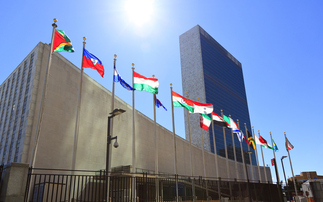
London promises tighter pollution controls as threat of EU fines increases

Mayor Boris sets out controversial plan to curb air pollution as EU figures show half of member states are at risk of fines over poor air quality

By James Murray

05 Oct 2009

Be the first to comment

Congestion charge

London mayor Boris Johnson has today unveiled wide-ranging plans designed to cut air pollution in the capital and avoid fines of up to £300m arising from the UK's continued breach of EU air-quality rules.

The new draft air-quality strategy sets out a raft of proposals designed to bring emissions of particulate matter (PM10) and nitrogen dioxide (NO2) in line with EU regulations, including an age limit on taxis, bus upgrades, and targeted action plans to cut emissions and improve traffic flow at "pollution hotspots".

The Mayor's Office predicted the new measures will cut PM10 levels 20 to 25 per cent by 2012 and deliver a 35 to 40 per cent reduction in NO2 by 2015.

However, Johnson's proposals could put him on a collision course with the government after he announced that the third phase of the Low-Emission Zone - which bans the most polluting vans and good vehicles from entering London – would not come into effect until 2012, a year after the UK is meant to meet the EU deadline for compliance with air-pollution rules.

Johnson controversially suspended the planned expansion of the zone back in February and today reiterated his view that delaying the introduction of the measure by two years would be good for the capital's businesses.

"While we undertake bold programmes to become a cleaner, healthier city, it is my duty as mayor to balance both the city’s environment and economic needs," he said.

"The Low-Emission Zone is currently effective in deterring the dirtiest and older heavy goods lorries, buses and coaches from our streets. Larger vans and minibuses will also have to meet emissions standards to avoid charges when driving in the zone but this will not be implemented until 2012 giving a reprieve to smaller businesses, charities and the self-employed who would most be affected, and giving them extra time in tough economic conditions to get cleaner vehicles and avoid charges."

Johnson's plans are due to be inspected by the government to see if they will indeed bring London into line with the EU targets.

The government had originally indicated in submissions to the EC that it would hit the targets by extending London's congestion zone to the west and by introducing the third phase of the zone – both of which Johnson has now scrapped or delayed until after the 2010 deadline for compliance.

The Department for the Environment, Food and Rural Affairs has warned Johnson that he will need to come up with an adequate replacement for the two measures or risk the government taking control of the issue from him.

However, Johnson argued that more support was needed from the government. " We are taking robust steps to tackle emissions but we cannot shoulder this burden alone," he said. "The additional measures I am proposing will deliver improvements in air quality, but they need financial and policy support from others, especially the government. Poor air quality desperately requires national policy solutions with adequate funding to support them."

Campaigners claim London is one of the worst cities in Europe in terms of air quality - a situation that is estimated to have contributed to the premature death of between 3,000 and 8,000 inhabitants in 2005.

London's new plan comes as figures released last week by the EU confirmed that the UK is not alone in struggling to meet air-quality targets.

Nearly half of all EU member states are facing sanctions over their failure to achieve 2010 air-quality standards prescribed under the EU National Emission Ceilings Directive.

The legally-binding directive lays out emissions limits for four air pollutants – sulphur dioxide (SO2), nitrogen oxides (NOx), non-methane volatile organic compounds (NMVOCs) and ammonia (NH3). These pollutants contribute to the formation of ozone and particulate matter, which are damaging both to the environment and human health.

But according to a status report published by the European Environment Agency, 12 out of the 27 EU member states, including the UK, are expected to miss the most demanding target on levels of NO2 pollution, putting them at risk of substantial fines.

While some countries such as the Netherlands, Sweden and Germany anticipate being just slightly off the mark in relation to their NOx goals, others such as Ireland, Austria and Belgium predict that they will exceed ceilings by as much as 60 per cent.

In addition, three member states – France, Germany and the Netherlands – project that they will each miss two targets, while Spain expects to miss three targets covering NOx, NMVOC and NH3. Spain believes that, even if the current economic slowdown is taken into consideration, it would still fail to come within prescribed limits.

As a result, NOx emissions for the EU as a whole are now projected to be six per cent higher than the aggregated member state ceilings and 16 per cent higher than the stricter ceiling for the EU as a whole. Only SO2 and NH3 emissions are expected to be substantially reduced and to meet aggregated ceiling requirements.

The figures come as the EC prepares to announce even stricter emission ceilings for 2020 and include national limits on fine particulate matter (PM2.5) for the first time.

WHAT DO YOU THINK? Add your comment


As campaigners again write to Nick Clegg demanding action on mandatory carbon reporting rules, would your business like to see standardised rules enacted?

74%

15%

11%

NEWSLETTER

Information currently unavailable.
bg-cit2

Smart working in the 21st century

This new handbook explores practices that allow organisations to overcome their technological limitations and traditional office-culture challenges - freeing employees to do more with less from wherever they want to.

RISO

Colour printing: a licence to waste

The centralised printers used in many businesses are wasteful, unreliable and expensive to run - just as their suppliers intend