Japan's businesses face $1bn energy bill hike under solar scheme

Electricity bills expected to rise as utilities pass on costs of new feed-in tariff

By Yvonne Chan in Hong Kong

21 Aug 2009

Comments: 1

Solar technology

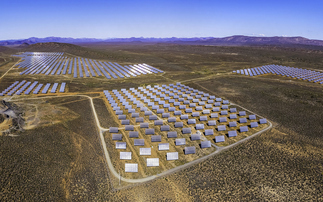
The case for investment in energy efficiency was hammered home to Japanese businesses yesterday with the release of a government-backed report suggesting corporate energy bills could rise by $1.1bn a year by 2020 as a result of the country's new solar energy feed-in tariff scheme.

The proposed incentive mechanism is to be introduced in April 2010 and will allow utilities to pass on the extra cost of acquiring surplus solar power at above market rates to their customers.

According to the new report from the Ministry of Economy, Trade and Industry Japan's business sector will see power costs increase by about $32m per month – or $384m annually – for the first few years of the scheme. It adds that the figure may then triple in the following five to 10 years to $95m per month, or $1.1bn annually.

Households will pay an average of $0.30 a month more, potentially rising to $0.90 – or $11 per year – by 2020, according to ministry estimates. The higher sum is equal to a collective $528m more in annual electricity bills charged to Japan's 48m households.

Under the feed-in tariff, utilities will be required to purchase surplus power generated from factories and households starting from November. Japan's 10 electricity companies will be obliged to pay $0.50 per kWh for any power from homes, while businesses that feed energy from solar panels into the grid will receive $0.25 per kWh.

The tariff structure is aimed at encouraging homeowners to install solar panels and sell excess electricity back to the grid.

Japan has a target of delivering a 10-fold increase on its 2005 solar generation capacity of 1.4GW by 2020, rising to a 40-fold increase by 2030.

The new report is the latest in a series of cost estimates related to Japan's carbon reduction efforts that are currently being calculated and publicised by the government. A panel report released earlier this month estimated that Japan's policies to reduce CO2 output will cost $515bn (£256bn) over the next decade.

WHAT DO YOU THINK? Add your comment


Greg Barker has said that despite cuts to solar incentives the industry will continue to grow this year - is he right?

4%

6%

7%

83%

INSIGHT

Submit your email address and we'll send a link to a personal newsletter control panel


Mechanical Integrity Engineer

09 Feb 2012

Mechanical Integrity Engineer, 35,000-45,000, Midlands A global power organization are looking to identify a Mechanical Integrity Engineer to become part of a globally accalimed engineer department. Delivering R&D Projects in relation to the business' GAS and Steam Turbine operations - the role will challenge the engineers mechanical design capabilities and integrity of company products. The succe

APC

Guidelines for specification of data centre power density

The science and practical application of an improved method for the specification of power and cooling infrastructure for data centres

Quocirca

Powering the data centre

A look at alternative approaches to managing energy for cost and/or sustainability reasons in data centres