08 Sep 2009
Urgent scientific investigation of the impact of a range of non-C02 pollutants is needed ahead of the climate convention in Copenhagen if real and meaningful action is to be taken against global warming, according to the UN.
Speaking at the World Climate Conference in Geneva late last week, Achim Steiner, executive director of the UN Environment programme, said the contribution of non-CO2 pollutants needs to ascertained to make sure that the decisions taken in Copenhagen in December significantly treat the causes of climate change.
"There remains some scientific uncertainty about some of these pollutants' precise contribution to global warming. But a growing body of science points to a potentially significant role," said Steiner.
"The international community's over-arching concern must be to seal a convincing deal at the UN climate convention meeting in Copenhagen in less than 100 days' time – one that puts the world on track towards swift and significant cuts in carbon dioxide while also providing the funding to assist vulnerable countries and communities to adapt."
One of the key UN officials involved in the Copenhagen negotiations to agree a successor to the Kyoto Accord last week warned that the talks remain stalled, likening the long-running process to "walking in wet sand".
The non-C02 pollutants – also referred to as "climate forcers" – include black carbon, low-level ozone, methane and nitrogen compounds, the UN said.
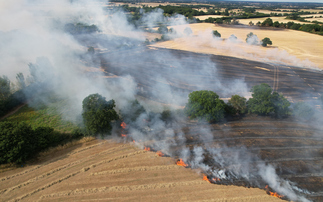
Black carbon is produced by the inefficient burning of biomass, dung for cooking, diesel engines and coal-fired power stations and is among a group of air pollutants linked to between 1.6 million and 1.8 million premature deaths annually as a result of indoor exposure and 800,000 as a result of outdoor exposure.
According to researchers, black carbon contribution to climate change could range from more than 20 per cent to up to 50 per cent of the CO2 warming effects. Black carbon emissions that end up on snow and ice, including the Arctic and Himalayan Tibetan Plateau, are believed to be especially damaging.
However, unlike CO2, which can remain in the atmosphere for hundreds or even thousands of years, black carbon has a life of a few weeks or less, scientists say.
Drew Shindell, a leading climatologist with NASA's Goddard Institute for Space Studies, said that combating pollutants other than C02 made strategic and financial sense.
"By including black carbon and tropospheric ozone precursors in climate mitigation strategies, alongside the longer-lived greenhouse gases, development strategies that are both more effective and less costly can be developed," he said.
The UNEP has suggested some examples of how strategies that include action on "climate forcers" such as black carbon could be integrated with plans to cut C02 emissions:
As well as black carbon, the UNEP is also investigating climate forcers such as low-level ozone, which it claims led to 21,000 premature deaths annually in Europe and the loss of billions of euros worth of crops.
LATEST STORIES ABOUT CLIMATE CHANGE
YOU MAY ALSO LIKE
LATEST JOBS
TODAY'S TOP STORIES
HIGHLIGHT
Solar sector warns proposed cuts to feed-in tariffs would make it impossible for them to deliver promised rates of return
INSIGHT
INSIGHT
The science and practical application of an improved method for the specification of power and cooling infrastructure for data centres
A look at alternative approaches to managing energy for cost and/or sustainability reasons in data centres
WHAT DO YOU THINK? Add your comment