Businesses urged to step up adaptation plans

Organisations should "aim for two degrees, but plan for four" in face of new research which warns of a 4C temperature rise by 2060

By James Murray

28 Sep 2009

Comments: 1

Drought

Businesses have been urged to further work to cut carbon emissions and increase investment in climate change adaptation in the light of shocking new research.

The study, from the Met Office's Hadley Centre, suggests average global temperatures are on track to rise 4C within many people's lifetimes.

And the research, to be presented later today at a scientific conference at Oxford University, also says that the catastrophic increase in temperature could occur as early as 2060 if global greenhouse gas emissions do not peak within the next few years.

The conference brings together research intended to update the UN's official 2007 Intergovernmental Panel on Climate Change (IPCC) report, which warned temperatures were likely to rise 4C by 2100.

Over the past two years, climate scientists have warned that the current rate of emissions growth and temperature rises exceed the IPCC's worse-case scenario. Temperature rises in excess of 6C are therefore likely by the end of the century.

New computer models which include the likely impact of so-called carbon feedbacks, where rising temperatures result in increased carbon emissions from natural sources, have now predicted that a 4C rise could occur by 2060 or 2070.

Scientists at this week's conference will warn warn that such temperature rises would lead to the inundation of many coastal regions, water shortages for around half the world's population and the potential triggering of irreversible global warming.

Speaking to BusinessGreen.com, Asher Minns of the Tyndall Centre for Climate Change Research, which helped organise this week's conference, said that the UN goal of avoiding "dangerous" levels of climate change of over 2C was looking increasingly unfeasible.

"The political target of 2C looks increasingly unlikely, and what this conference will look at is what 4C means and how can we adapt," he said. "2C is regarded as dangerous, so what does 4C mean for people and ecosystems?"

Minns stressed that it was essential that governments and businesses continued to accelerate efforts to cut carbon emissions in order to give the best chance of limiting temperature rises to 2C, but he added that there also had to be an increased focus on how to protect people and economies from the worst impacts of climate change.

"Mitigation is essential, but even if we act today we will still get climate change for some time, so it is just as essential in terms of protecting people and infrastructure and food security that we start to look at adaptation," he said. "We must still aim for 2C, but plan to adapt for 4C in case our efforts do not work."

Malcolm Tarling of the Association of British Insurers warned that the potential economic impact of 4C temperature rises is likely to be unprecedented. "We are currently working on our own study on the likely economic impact of the latest scientific projections, which we will release in November," he said, adding that the early findings indicated massive economic costs.

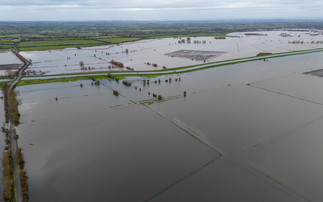
He urged businesses to put in place climate adaptation strategies, primarily by implementing risk management and contingency plans to cope with flooding. " The most tangible short- to medium-term risk is the increased risk of flooding and while you cannot stop the rain you can better protect yourself with good contingency planning," he said.

However, Craig Bennett of the Corporate Leaders Group on Climate Change warned that in the long term, adaptation measures will be unable to cope successfully with temperature rises in excess of 4C and as a result, businesses and governments needed to force emission reduction policies still further up the political agenda.

"If this was a foreign power threatening to wreak this kind of chaos it would be much higher up the political agenda - but the resulting impacts are the same, " he said. "Some people do not like the war analogy, but when you look at the impacts it is hard to think of a better metaphor – we need to mobilise as if we are preparing for a world war."

WHAT DO YOU THINK? Add your comment


Greg Barker has said that despite cuts to solar incentives the industry will continue to grow this year - is he right?

8%

7%

8%

77%

INSIGHT

Submit your email address and we'll send a link to a personal newsletter control panel


Hardware Engineer / Electroni

10 Feb 2012

Hardware Engineer FPGA,VHDL,Embedded C,PCB Layout,Orcad My client a leading design and manufacturing company is looking for an experienced hardware engineer, electronic engineer. This forward thinking organisation will create ample opportunities for the right Hardware electronics engineer. The Hardware Engineer will design, implement, evaluate and verify complete data acquisition systems and the s

APC

Guidelines for specification of data centre power density

The science and practical application of an improved method for the specification of power and cooling infrastructure for data centres

Quocirca

Powering the data centre

A look at alternative approaches to managing energy for cost and/or sustainability reasons in data centres