Brown hails EU 'breakthrough' on Copenhagen

EU leaders agree to provide fair share of €100bn a year climate funding, but precise details remain murky

By James Murray

30 Oct 2009

Comments: 1

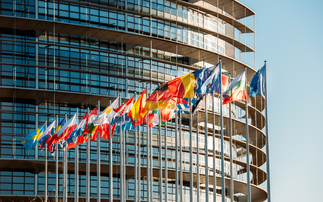
EU flags

British Prime Minister Gordon Brown said the EU will today deliver a " breakthrough" agreement on climate change funding that will increase the chances of an international deal being reached at the Copenhagen Summit in December.

However, it remains unlikely the EU will put a precise figure on the amount of funding it is willing to offer developing economies to help them cope with climate change, after several Eastern European officials signalled that there were still differences on how the funding will be raised.

Speaking ahead of the close of a two-day summit of EU leaders, Brown said that agreement had been reached on the EU's negotiating position for the historic talks, adding that member states were fully committed to delivering a robust deal.

"Europe is making three conditional offers: money on the table, saying we will do everything we can to make a climate change deal happen, helping developing countries into that agreement," he said, adding that the proposals would also include a new fast-track scheme, designed to get clean tech finance flowing as quickly as possible after a Copenhagen deal is reached.

"I think this is a breakthrough that takes us forward to Copenhagen and makes a Copenhagen agreement possible," he added.

However, according to a draft version of the summit's conclusions seen by the BBC, the EU is still fudging the precise amount of funding that will be offered.

The text showed that the leaders are willing to endorse the European Commission's recommendation that €100bn a year be provided to developing countries by 2020 to help them roll out clean technologies and adapt to the impacts of climate change. However, it estimates that public financing should make up anywhere between €22bn and €50bn of the total "subject to a fair burden-sharing at the global level". Under such an agreement, the EU is expected to contribute between €10bn and €15bn a year.

However, Poland's minister for Europe, Mikolaj Dowgielewicz, told reporters that there was a coalition of nine Eastern European countries that were willing to block a deal that would force them to hand funds to emerging economies that are already larger than their own.

"We don't want a situation where Romania or Bulgaria will pay Brazil to mitigate carbon dioxide emissions, because it's absurd," he said. "We don't want to become the museum of folklore of Eastern Europe."

The concerns expressed by the Eastern European bloc appear to have been accommodated in the final statement, with the draft text proposing that a funding mechanism "should take into account the ability to pay off less prosperous [EU] member states through an internal adjustment mechanism".

However, it again stopped short of explaining how the new mechanism would work and how the funding bill would be divided between different member states.

Danish Prime Minister Lars Lokke Rasmussen rejected the suggestion that the EU had fudged the issue of funding, arguing that it was willing to pay a "huge amount of money" as part of a Copenhagen deal.

"This is a signal to the poorest countries of the world," he told reporters. "It is also a strong signal to the United States, Japan and other countries."

His comments were echoed by Brown, who said the EU funding proposals represented a solid commitment to contribute a share of the €100bn of investment that will be needed. "There are very specific figures today," he said. "That is aid that is being provided to help developing countries meet their climate change targets and cut their emissions, where otherwise they couldn't afford to do so."

He added that the new funding, coupled with the commitment to cut emissions by up to 30 per cent by 2020 if other countries agree to similar cuts, meant that other nations "can now say they are ready to cut emissions substantially over the next few years".

The announcement comes as South African cleric Desmond Tutu wrote to EU leaders, criticising Poland's threat to block a funding deal and dismissing the suggestion that Eastern European countries were themselves too poor to provide aid to developing countries hit by climate change.

"Poland is among the 50 richest countries in the world, with a per capita gross domestic product three times that of China and 20 times that of Mozambique," he wrote.

WHAT DO YOU THINK? Add your comment


Greg Barker has said that despite cuts to solar incentives the industry will continue to grow this year - is he right?

8%

7%

9%

76%

INSIGHT

Submit your email address and we'll send a link to a personal newsletter control panel


Hardware Engineer / Electroni

10 Feb 2012

Hardware Engineer FPGA,VHDL,Embedded C,PCB Layout,Orcad My client a leading design and manufacturing company is looking for an experienced hardware engineer, electronic engineer. This forward thinking organisation will create ample opportunities for the right Hardware electronics engineer. The Hardware Engineer will design, implement, evaluate and verify complete data acquisition systems and the s

APC

Guidelines for specification of data centre power density

The science and practical application of an improved method for the specification of power and cooling infrastructure for data centres

Quocirca

Powering the data centre

A look at alternative approaches to managing energy for cost and/or sustainability reasons in data centres