13 Feb 2009
Every day could seem like Friday 13th over the coming decades if the UK does not act now to prepare for rising seas, higher temperatures and the increased likelihood of resource wars between nations, leading scientists and engineers have warned this week.
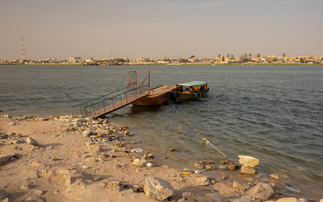
Issuing arguably his starkest warning yet about the threat to international security presented by climate change, Sir David King, former chief scientific advisor to the government, said that a series of "resource wars " would dominate the 21st century - and that the first of these wars had already occured, in Iraq.
"Future historians might look back on our particular recent past and see the Iraq war as the first of the conflicts of this kind - the first of the resource wars," he said at a lecture to the British Humanist Association. "Unless we get to grips with this problem globally, we potentially are going to lead ourselves into a situation where large, powerful nations will secure resources for their own people at the expense of others."
His comments follow those of climate scientist James Lovelock earlier this week who warned that the UK may have to impose ever tighter immigration policies to manage an influx of people seeking to escape climate change-related resource shortages and conflicts elsewhere in the world.
Both scientists' warnings echo the findings of a major report from defence think tank the Royal United Services Institute last year, which warned that predictions climate change droughts in regions such as China, India, Pakistan, Mexico and Africa could spark "hundred-year wars" between resource-strapped superpowers.
In related news, a report from the Institution of Mechanical Engineers (IMechE) released yesterday urged the government to begin upgrading buildings, transport networks and energy infrastructure now to cope with changing climatic conditions.
The document, entitled Climate Change: Adapting to the Inevitable, warned that the UK will face increased incidences of flooding and heat waves throughout this century and that ultimately sea levels could rise seven metres in coming centuries.
"A seven-metre rise in sea levels would impact on vast areas of the UK, including parts of London which border the Thames, [such as] Canary Wharf, Chelsea and Westminster, all of which would need to be abandoned," the report said.
The study recommends a massive overhaul of the UK's infrastructure, including moves to ensure new railways and roads avoid low ground, a rapid shift towards low carbon forms of energy, and even research into developing underground reservoirs that prevent evaporation during heat waves.
LATEST STORIES ABOUT CLIMATE CHANGE
YOU MAY ALSO LIKE
LATEST JOBS
TODAY'S TOP STORIES
HIGHLIGHT
Solar sector warns proposed cuts to feed-in tariffs would make it impossible for them to deliver promised rates of return
INSIGHT
INSIGHT
The science and practical application of an improved method for the specification of power and cooling infrastructure for data centres
A look at alternative approaches to managing energy for cost and/or sustainability reasons in data centres
WHAT DO YOU THINK? Add your comment