Cleantech urged to embrace "policy wonks"

Cleantech firms advised to step up efforts to help shape green legislation and incentives

By James Murray

25 Sep 2008

Be the first to comment

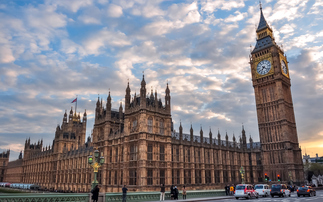
Parliament

Climate change entrepreneurs and investors were today advised to increase their engagement with policy makers or risk having their business models undermined by "wrong-headed" legislation.

Speaking to about 400 attendees at the Library House Essential Cleantech conference in Central London earlier today, former speaker of the California legislature and cleantech entrepreneur Robert Hertzberg warned that green businesses had to improve the level of dialogue with the legislators who will drive much of the demand for low carbon technologies.

"Unlike the Silicon Valley revolution, which was led by computer scientists, in this [cleantech] revolution the winners and losers will be decided in large part by policy wonks," he said. "You need to engage with elected officials in a much more serious way than has happened in the past, because at the moment they don't really get it."

Hertzberg, who is also chairman of thin film solar specialist G24i, predicted that a huge wave of new regulation and government cleantech investment was likely to follow the inauguration of a new US president, regardless of who wins this November's election.

But he warned that cleantech companies themselves had to contribute to the development of this new legislative framework or risk the perpetuation of incentive programmes that tend to only benefit some green technologies.

"The way governments place incentives at the moment is wrong headed," Hertzberg said, arguing that the appeal of market-based incentives were always undermined by politicians' reluctance to provide certainty that they will continue over the long term.

Referring to this week's vote Senate vote to extend tax credits for solar energy, Hertzberg warned that even an extension of eight years would not give investors the certainty they ideally wanted. "If you don't have certainty, incentives will continue and [cleantech] businesses end up having to hire lobbyists instead of engineers," he said.

Hertzberg argued that instead governments should focus policy efforts on " de-risking" all cleantech investments, by offering tax breaks for investors and imposing a "floor" on the price of carbon-intensive forms of energy that would allow cleantech firms to invest in new developments with a greater degree of certainty.

His comments were echoed by Richard Barrington, head of sustainability and public policy at IT giant Sun Microsystems, who also argued that green companies needed to be "smarter in our interaction" with regulators.

He cited the example of the EU's REACH directive, which is intended to lead to the gradual phasing out of potentially hazardous chemicals, arguing that companies needed to be aware now of which chemicals will be targeted.

"If you are developing a new clean technology that has a chemical in it that will be banned under REACH you are not going to be able to produce that product, " he said. "You need to engage with Brussels now, or you are going to have a serious problem."

WHAT DO YOU THINK? Add your comment


Greg Barker has said that despite cuts to solar incentives the industry will continue to grow this year - is he right?

4%

6%

7%

83%

INSIGHT

Submit your email address and we'll send a link to a personal newsletter control panel


Mechanical Integrity Engineer

09 Feb 2012

Mechanical Integrity Engineer, 35,000-45,000, Midlands A global power organization are looking to identify a Mechanical Integrity Engineer to become part of a globally accalimed engineer department. Delivering R&D Projects in relation to the business' GAS and Steam Turbine operations - the role will challenge the engineers mechanical design capabilities and integrity of company products. The succe

APC

Guidelines for specification of data centre power density

The science and practical application of an improved method for the specification of power and cooling infrastructure for data centres

Quocirca

Powering the data centre

A look at alternative approaches to managing energy for cost and/or sustainability reasons in data centres