Updated: Carbon target impasse continues as Bonn talks kick off

US insists that demands for emission cuts of between 25 and 40 per cent by 2020 remain unrealistic

By BusinessGreen.com staff

01 Jun 2009

Be the first to comment

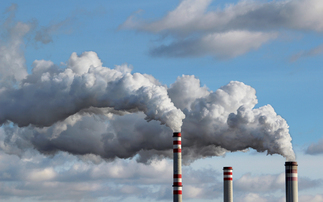
Power plant

The latest round of UN-backed climate change talks kicked off in Bonn, Germany today with the US negotiating team reiterating its view that rich nations are unlikely to be able to deliver the deep short-term cuts in carbon emissions being demanded by developing nations.

There has been a noticeable shift in the mood surrounding the long-running negotiations in recent months, with insiders claiming that the election of Barack Obama and a more co-operative approach from both the US and China has significantly increased the chances of a successor to the Kyoto Treaty being agreed at the planned Copenhagen conference at the end of the year.

Speaking at the start of the conference, Yvo De Boer, the UN's top climate change official said that with an official negotiating text on the table at the Bonn talks for the first time, there was plenty of cause for optimism.

"The political moment is right to reach an agreement," he said. "There is no doubt in my mind that the Copenhagen climate conference in December is going to lead to a result. If the world has learned anything from the financial crisis, it is that global issues require a global response."

However, speaking to Reuters ahead of the 12-day meeting in Bonn, Todd Stern, US special envoy for climate change, insisted that significant distance remains between richer and poorer nations on the topic of greenhouse gas emission targets.

The UN's climate change panel has called for developed economies to cut emissions by between 25 and 40 per cent by 2020, based on 1990 levels, while large developing nations such as China and India have insisted that rich countries should sign up to binding targets at the top of this range.

But Stern said that following conversations with European countries, the US remained convinced that such deep cuts are unrealistic.

"I don't think you will see a 25 to 40 per cent aggregate number," he said. Although he added that with the EU committed to 20 per cent cuts by 2020 and the US in the process of passing legislation demanding 17 per cent cuts, it was " possible [that] when you add everything up, you won't be that far away from it. "

Insiders said that with developing countries standing by demands for deeper cuts and the EU stuck somewhere in the middle, having agreed to sign up to 30 per cent cuts by 2020 if other large emitters agree to similar cuts, the issue of emissions targets is likely to be "kicked into the long grass" and will not be finalised until the weeks prior to Copenhagen.

Instead, the Bonn talks are expected to focus on the mechanisms and regulations that are expected to form part of any Copenhagen deal, including proposals to expand carbon trading, curb deforestation and set up climate change adaptation and clean tech transfer funds.

John Ashe, the newly-elected chairman of the Ad Hoc Working Group on Further commitments for Annex I Countries, said that it was important that some of these "more solvable issues" are resolved in Bonn, so that the talks can move on to the more contentious topics as Copenhagen approaches.

Meanwhile, a coalition of 70 of the world's scientific academies today released a joint statement calling on negotiators to recognise the threat posed by ocean acidification in the Copenhagen process and include measures to address the issue in any final deal.

Martin Rees, president of the UK Royal Society, which organised the joint statement, warned that ocean acidification "has not received much political attention", despite the fact that the trend is capable of "threatening food security, reducing coastal protection and damaging the local economies that may be least able to tolerate it".

The statement warns that without greater efforts to curb carbon emissions, all coral reefs and polar ecosystems could be "severely affected" by more acidic oceans by at least 2050.

WHAT DO YOU THINK? Add your comment


Greg Barker has said that despite cuts to solar incentives the industry will continue to grow this year - is he right?

8%

7%

8%

77%

INSIGHT

Submit your email address and we'll send a link to a personal newsletter control panel


Hardware Engineer / Electroni

10 Feb 2012

Hardware Engineer FPGA,VHDL,Embedded C,PCB Layout,Orcad My client a leading design and manufacturing company is looking for an experienced hardware engineer, electronic engineer. This forward thinking organisation will create ample opportunities for the right Hardware electronics engineer. The Hardware Engineer will design, implement, evaluate and verify complete data acquisition systems and the s

APC

Guidelines for specification of data centre power density

The science and practical application of an improved method for the specification of power and cooling infrastructure for data centres

Quocirca

Powering the data centre

A look at alternative approaches to managing energy for cost and/or sustainability reasons in data centres