UN climate chief warns 2020 carbon targets will be missed

As advisory group mulls proposal for aviation carbon tax, Yvo de Boer warns the world is not moving fast enough to cut emissions

By James Murray

08 Jun 2010

Comments: 2

Yvo De Boer

Yvo de Boer, the outgoing UN climate change chief, has offered arguably the bleakest assessment yet of the chances of an ambitious international climate treaty being agreed, warning that the world is unlikely to see greenhouse gas emissions peak within the next 10 years.

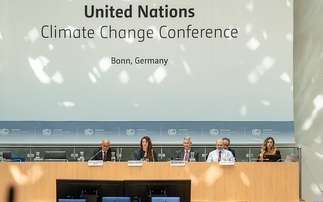
Speaking to reporters at the latest round of climate talks in Bonn yesterday, de Boer said he remained optimistic that countries will eventually agree ambitious long-term targets to cut emissions.

But he warned it was now highly unlikely that sufficiently ambitious targets would be agreed for the next decade, despite the fact that climate scientists have consistently warned that rapid action is required if average temperature rises this century are to be kept below two degrees.

"I don't see the process delivering adequate mitigation targets in the next decade," said de Boer, who will step down as head of the UN climate change secretariat at the end of this month.

According to the UN-backed Intergovernmental Panel on Climate Change (IPCC), the world needs to ensure that greenhouse gas emissions peak within the next decade if it is to stand a reasonable chance of limiting average temperature rises to two degrees.

To meet this target, the IPCC recommended that industrialised nations cut their greenhouse gas emissions by 25 to 40 per cent on 1990 levels by 2020. Meanwhile, the largest developing nations would be required to slow the rate at which their emissions are growing by about the same date and ensure that emissions peak soon after.

De Boer said the carbon targets proposed so far by developed countries amounted to "13 to 14 per cent below 1990 levels... and clearly we need to move beyond that".

His comments will add to growing scepticism that the UN negotiating process can deliver an agreement capable of making good on the stated aim of limiting temperature rises to no more than two degrees above pre-industrial levels.

Scientists have warned temperature increases of more than two degrees could prove "dangerous" as they may trigger increased emissions from natural carbon sinks, leading to runaway global warming.

The current round of talks in Bonn has now entered its second week, with few indications as to the progress of the negotiations.

A British official confirmed yesterday that the talks were making "good progress". However, there are known to be ongoing tensions over the extent to which the Copenhagen Accord will be integrated into the official UN negotiating texts, while diplomats reported that much of the first week of the talks was spent dealing with "procedural" issues.

WHAT DO YOU THINK? Add your comment


Greg Barker has said that despite cuts to solar incentives the industry will continue to grow this year - is he right?

8%

7%

9%

76%

INSIGHT

Submit your email address and we'll send a link to a personal newsletter control panel


Hardware Engineer / Electroni

10 Feb 2012

Hardware Engineer FPGA,VHDL,Embedded C,PCB Layout,Orcad My client a leading design and manufacturing company is looking for an experienced hardware engineer, electronic engineer. This forward thinking organisation will create ample opportunities for the right Hardware electronics engineer. The Hardware Engineer will design, implement, evaluate and verify complete data acquisition systems and the s

APC

Guidelines for specification of data centre power density

The science and practical application of an improved method for the specification of power and cooling infrastructure for data centres

Quocirca

Powering the data centre

A look at alternative approaches to managing energy for cost and/or sustainability reasons in data centres