CBI sets out 2020 road map to 30 per cent emission cuts

Business leaders call for accelerated roll out of low carbon policies, incentives and regulations

By James Murray

06 Apr 2009

Be the first to comment

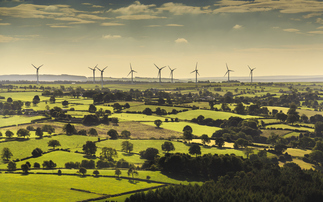
Wind turbine

The CBI has today issued its clearest call yet for a massive expansion of green regulations, incentives and investment as part of a major new road map detailing how the UK should deliver carbon cuts of 30 per cent by 2020.

The strategy document, which at times reads more like a wish list from an environmental NGO than the views of the traditionally anti-regulation employers association, sets out a 10-year plan to transform the UK economy through the widespread roll out of renewable energy and low carbon technologies.

The report consists of four road maps for the power, industrial, building and transport sectors, and while broadly supportive of the government's various low carbon policies, it warns that initiatives and regulations need to be accelerated and expanded if the UK is to have any chance of attracting the investment necessary to deliver deep emission reductions.

"Together these roadmaps show the practical steps that need to be taken from now until 2020 to make sure we meet our climate change targets, secure our energy supply and make the transition to a low carbon economy," said John Cridland, deputy director-general of the CBI.

However, he warned that the targets would not be met unless the government stepped up efforts to make investment in low carbon technologies and business models more attractive.

"Achieving all of this in the ambitious timeframe that has been set will require massive investment of private capital, much of it from abroad," he said. "But this will only be forthcoming if there is certainty about the direction of government policy, a robust price for carbon, a clear planning and regulatory structure, the right regime for tax and intellectual property, and the skills that will be needed to bring all this new kit to market."

In particular, the road maps call on the government to: authorise plans for a tidal barrage in the Severn Estuary capable of generating five per cent of UK electricity; accelerate plans for a new fleet of nuclear power plants to ensure three reactors are operational by 2020; approve an additional carbon capture and storage demonstration project; speed up its proposed roll out of home insulation and domestic smart meters; and increase the availability of biofuels.

It also argues that while businesses are continuing to invest in low carbon projects despite the currently low price of carbon in the European emissions trading scheme, those planning renewable energy projects that will deliver returns over 20 years or more need greater guidance on how the scheme will work after 2020.

In a break with its traditional opposition to increased regulation, the road maps call for a significant expansion of green legislation, including the development of new energy efficiency rules for renovating buildings, an expansion of energy labelling to include a wider range of products and the acceleration of EU plans for energy efficient product standards.

In addition to tighter regulations, the reports call for a huge expansion in the incentives on offer for those individuals and businesses that purchase green technologies, recommending a scheme to reward those who replace old vehicles with greener models as well as new incentives for people buying energy efficient white goods.

Cridland said that the government should also take direct action to drive the development of low carbon technologies by announcing immediate plans to purchase green technologies such as electric cars. "The £250m the government has pledged for the development of low carbon vehicles is welcome, but if it were to use its procurement muscle to buy a fleet of electric cars, this would send a strong signal to businesses and investors of its commitment," he said.

The report argued that the purchase of even a small number of electric vehicles by the public sector might look symbolic, but it would "break the circle of inaction" by strengthening the case for investment in recharging infrastructure.

A spokesman for the Department of Energy and Climate Change said that the government was addressing many of the issues raised in the CBI road maps. "The government has been working to ensure that the short, medium and long term environment for energy investment remains healthy and that any barriers identified are swiftly removed," he said. "That's what we have been doing through the energy and planning acts and we won't relent from continuing to do so."

The CBI report was welcomed by Friends of the Earth executive director Andy Atkins who said it was good to see businesses "pointing out that not enough is being done to cut UK greenhouse gas emissions".

But he warned that the CBI's plans to cut emissions 30 per cent by 2020 were still not ambitious enough. Climate change scientists recently warned that global emissions need to peak within five years if there is to be a reasonable chance of avoiding "dangerous" levels of climate change.

"The government must send the right signal to industry by setting a carbon budget that ensures we cut UK emissions at home by at least 42 per cent by 2020, and providing real incentives to companies to invest in renewable energy," he said.

WHAT DO YOU THINK? Add your comment


Greg Barker has said that despite cuts to solar incentives the industry will continue to grow this year - is he right?

8%

7%

9%

76%

INSIGHT

Submit your email address and we'll send a link to a personal newsletter control panel


Mechanical Integrity Engineer

09 Feb 2012

Mechanical Integrity Engineer, 35,000-45,000, Midlands A global power organization are looking to identify a Mechanical Integrity Engineer to become part of a globally accalimed engineer department. Delivering R&D Projects in relation to the business' GAS and Steam Turbine operations - the role will challenge the engineers mechanical design capabilities and integrity of company products. The succe

APC

Guidelines for specification of data centre power density

The science and practical application of an improved method for the specification of power and cooling infrastructure for data centres

Quocirca

Powering the data centre

A look at alternative approaches to managing energy for cost and/or sustainability reasons in data centres