EU commits to finalise climate change legislation within the year

Leaders agree to a timeline that will see 2020 target to cut emissions by 20 per cent formally adopted next March, and threaten protectionist measures if post-Kyoto negotiations fail

By James Murray

14 Mar 2008

Be the first to comment

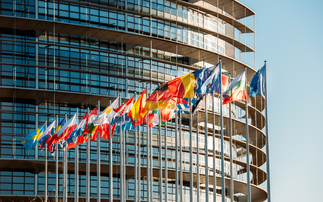
EU flags

European leaders are today expected to announce that they will formally adopt the EU's ambitious action plan for cutting carbon emissions by 20 per cent by 2020 in the next 12 months.

According to a draft statement released at the ongoing Brussels summit yesterday, the leaders are committed to finalising negotiations on the plan by the end of the year and formally adopting the new legislation by next March.

Under the proposals put forward in January, the EU will commit to a 20 per cent cut in carbon emissions by 2020, as well as an expansion of the emissions trading scheme, an increase in the share of energy coming from renewables to 20 per cent, and the goal of ensuring the proportion of biofuels in vehicle fuel rises to 10 per cent by the same date.

It is hoped that by formally adopting the targets next March the EU will strengthen its bargaining position ahead of the culmination of international negotiations to agree a successor to the Kyoto agreement, which are scheduled to be finalised at a summit in Copenhagen next December.

EU leaders yesterday reiterated their offer to aim for a 30 per cent cut in emissions by 2020 if a workable international agreement is reached.

The draft statement also claims that the new legislation should be introduced in a way that avoids "excessive costs for Member States" and insists that " appropriate measures [should] be implemented in the event that other countries do not commit to taking adequate measures to reduce greenhouse gas emissions in the context of an international agreement".

The passage was widely interpreted as a thinly veiled threat to other nations, including the US and China, that the EU will take protectionist measures to stop imports from countries with more lax environmental regulations undercutting European firms if a post-Kyoto agreement is not reached.

French President Nicolas Sarkozy, who will oversee the final round of negotiations on the EU proposals during France's presidency of the EU in the second half of this year, said that such measures were likely to be adopted if an international framework is not established.

"The main concern is implementing a mechanism that will hit imports from those countries that don't play the game," he told reporters.

Proposals being mooted at the summit included imposing tariffs on imports to the EU from countries that do not force energy industries, such as steel and concrete, to pay for their carbon emissions or forcing such firms to buy emissions trading credits when importing goods to the trade bloc.

Meanwhile, Gordon Brown's plans to cut VAT on green goods and services to just five per cent faced a set back after European Commissioner José Manuel Barroso said some states would not support the proposal.

However, according to reports British negotiators remain optimistic that opponents to the proposals can be won over. Speaking yesterday, Brown said that the proposals, which have already secured backing from France, "can make a big difference to whether people buy environmentally friendly goods".

WHAT DO YOU THINK? Add your comment


Greg Barker has said that despite cuts to solar incentives the industry will continue to grow this year - is he right?

3%

6%

7%

84%

INSIGHT

Submit your email address and we'll send a link to a personal newsletter control panel


Mechanical Integrity Engineer

09 Feb 2012

Mechanical Integrity Engineer, 35,000-45,000, Midlands A global power organization are looking to identify a Mechanical Integrity Engineer to become part of a globally accalimed engineer department. Delivering R&D Projects in relation to the business' GAS and Steam Turbine operations - the role will challenge the engineers mechanical design capabilities and integrity of company products. The succe

APC

Guidelines for specification of data centre power density

The science and practical application of an improved method for the specification of power and cooling infrastructure for data centres

Quocirca

Powering the data centre

A look at alternative approaches to managing energy for cost and/or sustainability reasons in data centres