06 Nov 2009
Hopes that a legally binding climate change treaty will be signed at the UN's Copenhagen Summit were finally extinguished yesterday when senior officials and politicians echoed US predictions that agreement would be delayed for at least six months.
Negotiators gathered at the final round of talks in Barcelona conceded that a legally binding treaty would now not be delivered until next year, with a UN meeting in Mexico in December now the most likely venue for the treaty to be finalised.
However, they insisted there were still hopes that a "politically binding" agreement could be reached in Copenhagen that contains clear emission targets for industrialised countries, commitments to improve forest protection and expand carbon trading, and a time line for delivering a legal treaty next year.
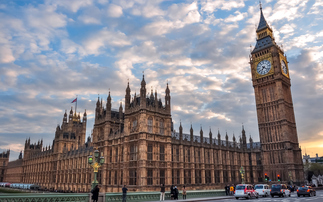
Speaking in the House of Commons, British energy and climate change secretary Ed Miliband publicly conceded for the first time that a treaty would not be signed in Copenhagen, admitting that "the UN negotiations are moving too slowly and not going well".
"We would have preferred a full legal treaty, it has to be said," he admitted. "I think the important thing about the agreement we now seek in December is that while it may be a political agreement, it must lead, on a very clear timetable, to a legally binding treaty."
Miliband also insisted that he would continue to push for a detailed political agreement that contains emission reduction targets and can provide the framework for a legal treaty.
"I'll be completely clear about this, I think an agreement without numbers is not a great agreement. In fact, it's a wholly inadequate agreement," he said. " We must have reduction commitments from developed countries. We also must have action from developing countries which translate into reduced quantities of emissions – not cuts in emissions, yet, from major developing countries before 2020 – but real actions which contribute to the kind of peaking of global emissions which I think is a central part of this agreement."
However, the chances of emission targets being agreed remain slim, with US officials refusing to set out emission reduction goals until a domestic climate bill has been passed by Congress. The bill controversially moved through a Senate committee yesterday despite a Republican boycott, but the White House is resigned to it not being finalised until early next year.
The shift in focus from a legal to a political agreement drew an angry response from developing countries and NGOs, who accused rich countries of dragging their heels and failing to agree to emission reductions recommended by climate scientists.
"Politically binding agreements are worth very little," said Lumumba Di-Aping, chair of the G77 group of developing countries. "Tell me of any politician who delivers a politically binding agreement."
Earlier in the week, UN secretary general Ban Ki-moon warned that the world could not afford to delay an agreement by a whole year, pointing to recent climate science which suggests the planet is currently on track to see temperature rises of more than six degrees by 2100.
European Commission president Jose Manuel Barroso also urged negotiators not to downgrade expectations for Copenhagen, telling AFP that "if we start… now to speak about Plan B in Copenhagen, we’ll probably end in Plan F for failure".
The delay is also likely to anger business groups which have been calling for a clear international deal to help provide them with greater certainty over the future legislative landscape and incentive schemes that inform their low-carbon investments.
However, British officials said that a delay would make it possible to deliver a robust deal, pointing out that the Kyoto Treaty was only finalised after a year of further talks.
LATEST STORIES ABOUT LEGISLATION
YOU MAY ALSO LIKE
LATEST JOBS
TODAY'S TOP STORIES
HIGHLIGHT
Everyone welcomes Greg Barker’s pledge to grow the solar industry, but with the small print promising to shrink the sector this year firms are divided on how to respond
INSIGHT
INSIGHT
The science and practical application of an improved method for the specification of power and cooling infrastructure for data centres
A look at alternative approaches to managing energy for cost and/or sustainability reasons in data centres
WHAT DO YOU THINK? Add your comment
Www businessgreen.. WTF? :)
Posted by www.businessgreen.com, 22 Apr 2011
copenhegan summit is only for developed countries
I think enviorenment is an issue which needs to be addressed globaly uniformally and the whole world should come under a single agreement to keep alive our mother nature
Posted by Rana Pratap Thakur, 08 Dec 2009