Businesses frustrated by EU's conflicting green laws

Execs call for greater co-operation between EU and national governments on green legislation

By BusinessGreen Staff

12 Dec 2007

Be the first to comment

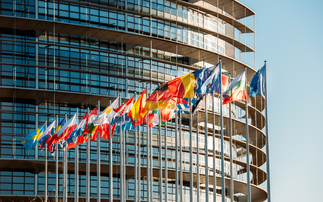
EU flags

Europe's largest businesses are becoming increasingly frustrated at the patchwork approach to environmental regulation developing across the continent and would like to see greater co-operation between the EU and national governments on green legislation.

That is the conclusion of a survey of senior executives at 200 of Europe's largest companies that found that 86 per cent believe there is conflict between existing national and EU regulations.

Nine out of 10 respondents also argued there was a financial burden to complying with low-carbon economy regulations, with execs predicting they would be spending an average of 5.7 per cent of their revenue on compliance with green legislation.

Additionally, 94 per cent of respondents argued that business leaders should have greater involvement in the development of green laws at both a country and European level in order to help establish the appropriate legislation. In particular, two-thirds urged governments to develop a mandatory Europe-wide system for environmental reporting that would provide firms with a standard method for calculating and reporting carbon emissions.

"Currently, each country is adopting a different set of regulations, applicable to different industries, pushing different technologies and different calculation methods," said Nick Caplan, chief marketing officer at IT services firm LogicaCMG, which commissioned the research. "Introducing a harmonised and mandatory environmental rating system would negate this and also enable companies that truly have green strategies to brand their greenness more effectively and get better capital value estimates from the financial markets.”

Ian Parkes, director of research firm Coleman Parkes, which carried out the study, added that businesses should be more involved in the development of green legislation.

"When conducting the research, I saw a genuine eagerness from businesses to work more closely at a governmental level to help set the environmental directives," he said. "Companies truly believe that by having representative businesses across Europe involved in this process at a higher level these frustrating conflicts can be avoided."

WHAT DO YOU THINK? Add your comment


Greg Barker has said that despite cuts to solar incentives the industry will continue to grow this year - is he right?

3%

6%

7%

84%

INSIGHT

Submit your email address and we'll send a link to a personal newsletter control panel


Mechanical Integrity Engineer

09 Feb 2012

Mechanical Integrity Engineer, 35,000-45,000, Midlands A global power organization are looking to identify a Mechanical Integrity Engineer to become part of a globally accalimed engineer department. Delivering R&D Projects in relation to the business' GAS and Steam Turbine operations - the role will challenge the engineers mechanical design capabilities and integrity of company products. The succe

APC

Guidelines for specification of data centre power density

The science and practical application of an improved method for the specification of power and cooling infrastructure for data centres

Quocirca

Powering the data centre

A look at alternative approaches to managing energy for cost and/or sustainability reasons in data centres