22 Apr 2009
Chancellor Alistair Darling today unveiled the world's first carbon budget, pledging to slash UK emissions 34 per cent on 1990 levels by 2020 and announcing billions of pounds in fresh clean tech investment to help ensure the new target is met.
Darling hailed the new legally binding targets as a "landmark step", promising that they would provide businesses with the certainty they need to justify investment in low carbon technologies and help create hundreds of thousands of high-value jobs.
The proposals were broadly welcomed by green businesses and environmental groups, but there was also concern that the target was at the bottom end of the range recommended by the independent climate change committee, as well as fears that new funding commitments for offshore wind, carbon capture and storage, and other clean technologies, were still not ambitious enough.
Despite expectations of an austerity budget, Darling delivered a raft of green spending commitments, pledging to spend over £1bn on green measures designed to cut carbon emissions and create green collar jobs.
These included a new £750m fund for emerging technologies such as clean tech, £405m specifically for green manufacturing, an additional £435m for building energy efficiency initiatives, and £260m for skills development in industries with "strong future demand". Darling added that £4bn in low carbon investment would also be provided by the European Investment Bank.
There was also good news for companies looking to invest in low carbon technologies, with the government pledging to double the main capital allowance rate to 40 per cent, delivering enhanced tax relief of £50bn this year, and vowing to exempt combined heat and power plants from the climate change levy.
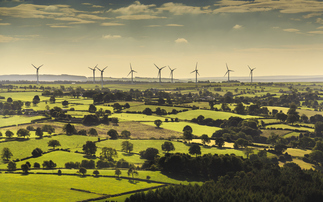
The chancellor responded to calls for more support for offshore wind and carbon capture and storage (CCS) projects, vowing to turn the North Sea into a new "energy hub" built around gas storage, carbon capture and offshore wind.
He said that the UK had become a world leader in the oil exploration sector as a result of North Sea oil and gas, and that he wanted to repeat that success with low carbon technologies.
In response to growing fears that rising turbine costs are undermining the economic case for offshore wind farms, Darling said that the government would increase the subsidy developers receive through the Renewables Obligation by £525m. Darling said that he was confident the move would free up investment in the sector, but the new incentives fall well short of the £2bn in direct aid recently requested by the British Wind Energy Association.
He also announced that the government would develop a new funding mechanism for CCS that will see at least two more demonstration plants, and possibly as many as four, on top of the £1bn already planned. Climate change and energy secretary Ed Miliband is scheduled to announce the details of the new funding scheme tomorrow morning.
In a controversial move, Darling also gave the go ahead to plans for a car scrappage scheme that will see motorists of cars over ten years old paid £2,000 if they trade their vehicle in for a new model. The car industry has claimed the scheme, which is modelled on similar versions on the continent, would deliver carbon savings by encouraging people to buy more fuel-efficient vehicles. But green groups have disputed the industry's claims, arguing that any savings will be minimal and that the incentives will not be confined to greener cars.
Peter Young, chairman of the Aldersgate Group, welcomed the release of the world's first carbon budget, but warned there was a real risk it would not be met without further government investment in low carbon technologies. "Whilst additional support for CCS, offshore wind and energy efficiency is welcome, the scale of green fiscal stimuli and green credentials is inadequate compared to the size of the economic and environmental challenges we face," he said.
Friends of the Earth was even more dismissive of the budget's green credentials, warning that the carbon budget targets were out of step with the latest climate science and that investment in renewables were insufficient to deliver deep cuts.
"The green sheen on this year's budget will do little to disguise the fact that yet again the government has merely applied a sticking plaster to a low carbon industry on life support," said executive director Andy Atkins. "The government should be sprinting towards a low carbon future - instead it's limping along."
LATEST STORIES ABOUT LEGISLATION
YOU MAY ALSO LIKE
LATEST JOBS
TODAY'S TOP STORIES
HIGHLIGHT
Companies must be more open about which groups they fund and why, say green marketing experts
INSIGHT
INSIGHT
The science and practical application of an improved method for the specification of power and cooling infrastructure for data centres
A look at alternative approaches to managing energy for cost and/or sustainability reasons in data centres
WHAT DO YOU THINK? Add your comment