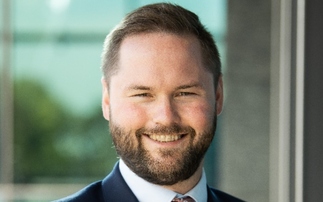
"This is an absolute target"

Chris Burgess, Vodafone's director of corporate responsibility, reveals how and why the mobile giant came to commit to a halving of its carbon emissions

By James Murray

24 Apr 2008

Be the first to comment

BusinessGreen: So what exactly has Vodafone committed to as part of its latest green announcement?
Chris Burgess: We've announced that we will cut emissions by 50 per cent against a base line year of 2006/07 by 2020.

Vodafone already had targets in place to cut emissions, what made you go with the new goal?
This is an absolute target. We already had relative targets in place [to cut emissions relative to the amount of network traffic] and we had been reporting on that, but the debate has moved on and based on the engagement we've had with stakeholders we feel that an absolute target is what is required.

What made you pick 50 per cent as the target?
We looked at a range of targets ranging from 20 per cent to offsetting all emissions and going carbon neutral, but we felt that 50 per cent was the right balance between being achievable, but still being tough and demanding. We looked at the progress we have made so far and extrapolated out how that was set to continue and we reckon that 50 per cent can be reached. Obviously that is based on some variables, such as how the renewable energy market in the UK will evolve and how much capacity there will be, but we're confident the target can be met.

So how will you reach the target?
It will come down to a combination of factors and we appreciate we need to be flexible about how we get there, which is why we haven’t set a specific target for renewable energy use or energy efficiency gains. However, we do expect improvements in energy efficiency, particularly in network equipment, to play a major role. We've seen steep changes in recent years in the energy efficiency of many of the technologies used in mobile phone base stations, and we are using better layouts in many of our stations to enable free cooling that requires no air conditioning. We've also undertaken comprehensive tests of lots of the equipment we use, and found that they can run hotter than the manufacturers guidelines say without causing any reliability problems, so we are scaling back on cooling in many base stations, which saves a lot of energy.

What are you doing to try and decarbonise the energy you use?
We are sourcing renewable energy where possible from power providers and we have also undertaken trials to use microgeneration technologies on base stations to provide power. The practice of using solar panels on base stations in some developing economies that do not always have readily accessible grid power is now pretty well established, and we are investigating rolling that technology out further.

You have also committed to developing greener products for customers such as more efficient charging units and solar powered chargers. When can we expect to see those in the market?
I can’t give you a precise timeline as yet, but the solar-powered chargers are now available from some firms and they are getting more efficient all the time. We expect to initially roll them out in developing markets where mains supply can be an issue, but from there we could make them available more widely.

And what will you be offering corporate customers in this field?
Another area we are looking at is remote monitoring technology, which will have a major role to play in reducing travel and emissions. It is basically a means of installing text messaging technology at a remote location to transmit data so that you don’t have to send someone out to collect it. The most obvious application would be with utility meter reading, where you could use the remote monitoring system to let the utility know how much energy or water has been used. It is currently a relatively small part of the business, but we are targeting is as a major growth area. It shows that as well as cutting our own emissions, we can also play a major role in helping to cut our customers emissions.

WHAT DO YOU THINK? Add your comment


Greg Barker has said that despite cuts to solar incentives the industry will continue to grow this year - is he right?

2%

5%

8%

85%

INSIGHT

Submit your email address and we'll send a link to a personal newsletter control panel


Mechanical Integrity Engineer

09 Feb 2012

Mechanical Integrity Engineer, 35,000-45,000, Midlands A global power organization are looking to identify a Mechanical Integrity Engineer to become part of a globally accalimed engineer department. Delivering R&D Projects in relation to the business' GAS and Steam Turbine operations - the role will challenge the engineers mechanical design capabilities and integrity of company products. The succe

APC

Guidelines for specification of data centre power density

The science and practical application of an improved method for the specification of power and cooling infrastructure for data centres

Quocirca

Powering the data centre

A look at alternative approaches to managing energy for cost and/or sustainability reasons in data centres