Further rifts emerge on day three of Copenhagen

Split emerges between developing nations, as think-tank argues Danish text contained more ambition from industrialised countries than first thought

By James Murray

09 Dec 2009

Comments: 4

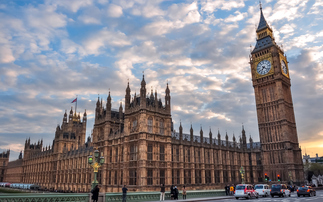
Copenhagen Conference Center

The rift between industrialised and developing nations at the Copenhagen Summit was complicated further this morning as cracks began to appear in the formerly united bloc of developing countries.

A group of small island states and poorer African nations effectively broke with the rest of the G77 plus China group of developing economies, demanding significantly tougher emission targets be agreed as part of a legally binding deal.

The group, which included the Cook Islands, Barbados and Fiji, as well as a number of poor African countries including Sierra Leone, Senegal and Cape Verdem, was led by the tiny Pacific island state of Tuvalu.

Tuvalu's negotiator Ian Fry demanded a suspension of negotiations until a proposal from the country for a legally binding deal was discussed. Chairwoman Connie Hedegaard agreed to the request, moving on to other items to allow further discussions behind the scenes.

The Tuvalu proposal called for a separate legally binding deal to be signed next week that could run alongside the Kyoto Protocol and reiterated demands from a number of island states that the summit should aim for a deal that limits temperature increases to 1.5 degrees and aims to stabilise greenhouse gas concentrations in the atmosphere at 350 parts per million (ppm).

However, the negotiations have primarily focused on limiting temperature increases to two degrees and stabilising concentrations at 450ppm, and in a rare display of disunity between the developing countries attending the talks, China and other large emerging economies signalled their opposition to the more demanding targets, arguing they would curb economic growth.

In the same session, China's lead negotiator Su Wei reiterated calls for industrialised nations to agree to more demanding emission reduction targets.

However, speculation is mounting that industrialised countries could be willing to sign up to demanding long-term emission reduction targets that would ensure global per capita emissions converge at an equitable level by 2050.

The leaked Danish text that emerged yesterday prompted a furious response from many developing countries, with a briefing document on the draft proposals apparently accusing the rich nations behind the text of tabling emission targets that would result in citizens in industrialised countries being able to emit almost twice as much as those in poorer countries.

However, Aubrey Meyer, founder of the Global Commons Institute (GCI) think-tank that developed the contraction and convergence model on which the Danish text appears to draw, said the targets proposed in the draft document were in fact in line with global capita emissions converging at the same level by mid-century.

The Danish text states that the parties "support the goal of a reduction of global annual emissions in 2050 by at least 50 per cent versus 1990 annual emissions" and that "the Parties' contributions towards the goal should take into account common but different responsibility and respective capabilities and a long-term convergence of per capita emissions."

It goes on to state that the "developed-country Parties support a goal to reduce their emissions of greenhouse gases in aggregate by 80 per cent or more by 2050 versus 1990".

Meyer said that the 50 per cent overall target and the 80 per cent target for industrialised countries was in line with that required to ensure convergence of per capita emissions.

He speculated that the developing nations' anger at the text was driven either by a misunderstanding of the figures, or more likely a frustration with the richer nations' desire to impose a deal on the rest of the delegates and their consistent failure to clearly explain the thinking behind their proposals.

WHAT DO YOU THINK? Add your comment


Greg Barker has said that despite cuts to solar incentives the industry will continue to grow this year - is he right?

4%

7%

8%

81%

INSIGHT

Submit your email address and we'll send a link to a personal newsletter control panel


Mechanical Integrity Engineer

09 Feb 2012

Mechanical Integrity Engineer, 35,000-45,000, Midlands A global power organization are looking to identify a Mechanical Integrity Engineer to become part of a globally accalimed engineer department. Delivering R&D Projects in relation to the business' GAS and Steam Turbine operations - the role will challenge the engineers mechanical design capabilities and integrity of company products. The succe

APC

Guidelines for specification of data centre power density

The science and practical application of an improved method for the specification of power and cooling infrastructure for data centres

Quocirca

Powering the data centre

A look at alternative approaches to managing energy for cost and/or sustainability reasons in data centres