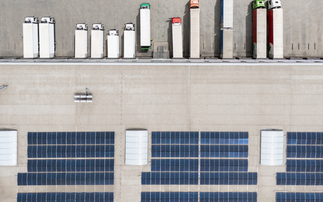
Sri Lanka has flicked the switch on its first fully solar-powered village – providing energy to 300 households as well as public buildings, street lights and places of worship.
Galgamuwa is located in Uva province’s southern district of Monaragala, where half the population lives without power. Access to electricity in Sri Lanka is heavily concentrated in urban areas.
Seventy of the households belong to the Veddah tribe, an indigenous hunting-gathering society.
The project has been supported by the Indian government, which donated Indian-made solar power equipment worth $100,000 (£62,000).
In related news, Sri Lanka's Ministry of Power and Energy last week announced that plans are underway to construct four wind farms with a total installed capacity of 34MW and seven biomass power plants with a combined capacity of 18MW.
The projects are part of a major renewable energy push from the government designed to ensure 10 per cent of its energy is generated from renewable sources by 2016.
Currently, around four per cent of Sri Lanka's energy mix comes from renewables, primarily in the form of small-scale hydroelectric projects.
Sri Lanka's sole operating wind farm is a five-turbine project with a capacity of 3MW. It was set up in 1999 at Hambantota town, located on the country's south coast.
Cameron presents pre-election energy policy, promising greater investment certainty for low-carbon projects, green loans for households, and streamlining of planning system 19 Mar 2010
Joint statement from carbon exchange and Hungarian government aims to restore confidence in CER market 19 Mar 2010
From climate change contrarians to the "KitKatastrophe" of Nestle's palm oil policy, we look at the best the green web has to offer this week 19 Mar 2010
From the government's plans for a marine energy revolution to John Lewis' proposals for an off-grid supermarket 19 Mar 2010