People who eschew full fat Coca-Cola for the drinks giant's diet alternatives were given another reason to feel good about themselves today, after the company announced the results of recent carbon footprint research showing its Diet Coke and Coke Zero products result in lower carbon emissions than its standard drink.
However, they are likely to remain largely unaware of this extra environmental benefit, as the company has controversially decided not to include the carbon footprinting information on its products.
According to research undertaken with the Carbon Trust, a 330ml can of Coca-Cola sold in the UK has a carbon footprint of 170 grams, while the same sized can of Diet Coke or Coke Zero has a footprint of 150 grams. Meanwhile, a 330ml glass bottle of Coca-Cola has a footprint of 360 grams.
The research studied the entire lifecycle of the products, including manufacture, packaging, distribution, storage and disposal, and found that packaging accounted for between 30 and 70 per cent of the product's carbon footprint.
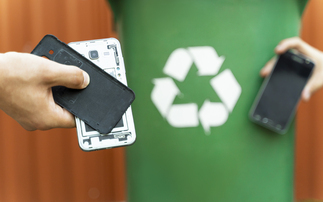
It revealed that using recycled material in the manufacture of the packaging and ensuring the product was recycled at the end of its life could cut the carbon footprint by 60 per cent. For example, recycling a regular coke can cuts its carbon footprint from 170g to 100g, while recycling a diet Coke or Coke Zero can would cut the footprint from 150g to 85g.
Sanjay Guha, president of Coca-Cola in Great Britain and Ireland, said that the research would help inform the company’s various environmental initiatives, including its targets to increase the use of recycled material in its packaging and plans to encourage customers to recycle more material.
As we move forward, we will look to integrate the carbon footprint information with other key environmental impacts, for example water, and explore how best to share the total environmental impact of our products with consumers, " he said.
However, despite this commitment the company has decided that unlike Tesco, Walkers, Innocent Smoothies and many of the other companies that have worked with the Carbon Trust to measures products' carbon footprints, it will not put the data on its cans and bottles.
A spokeswoman for the company said that detailed information on the carbon footprint of the 14 products covered by the research would be featured on the corporate responsibility section of the company's website, providing customers with the ability to consider carbon data alongside information on other environmental issues such as water use.
She said that if customers demanded that the information was included on the products then the company would look at adding it, but insisted that research had shown that the environmental information that customers want on the cans first and foremost is advice on how to recycle.
Two of the world's biggest brands extend sustainability commitments in face of high-profile criticism 27 Jul 2009
Drinks giant to launch branded city centre recycling zone to help cut its carbon footprint 17 Sep 2009
Plastic spirit bottles and lightweight glass are on the shopping list as supermarkets commit to cutting packaging waste within three years 04 Mar 2010
Cameron presents pre-election energy policy, promising greater investment certainty for low-carbon projects, green loans for households, and streamlining of planning system 19 Mar 2010
Joint statement from carbon exchange and Hungarian government aims to restore confidence in CER market 19 Mar 2010
From climate change contrarians to the "KitKatastrophe" of Nestle's palm oil policy, we look at the best the green web has to offer this week 19 Mar 2010
From the government's plans for a marine energy revolution to John Lewis' proposals for an off-grid supermarket 19 Mar 2010