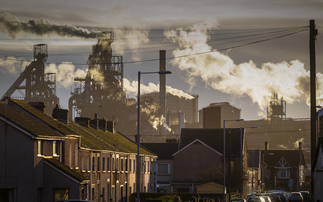
They may have to face up to habitual accusations of "greenwash", but that has not stopped oil giants Shell and BP underlining their commitment to the emerging carbon capture and storage sector this past week, with both oil giants unveiling fresh R&D investments.
Shell announced on Monday that it has forked out an undisclosed sum to acquire Canada-based Cansolv Technologies, a firm specialising in the development of emission capture systems.
The company currently provides so-called scrubbing technologies to oil refineries, chemical processing plants, utilities and metal manufacturers that remove sulphur dioxide from combustion gases, limiting their contribution to acid rain, and has also launched a new carbon capture system that it claims is "among the world leading technologies for CO2 capture".
In addition to its existing portfolio, the firm also boasts significant R &D capabilities and claims to be working on the development of increasingly efficient solvents for CO2 capture, as well as a new "multi-pollutant abatement solution" capable of removing not only CO2 and sulphur dioxide from gas streams, but also other pollutants such as Nitrogen Oxide and Mercury.
Greg Lewin, president of Shell Global Solutions International said that the company expected demand for Cansolv's products to increase as heavy polluting sectors face ever more stringent environmental regulations.
"As global energy demand grows and the availability of easy oil and gas diminishes, strong gas treating capabilities will be required to help unlock new resources such as complex contaminated gases or coal, while maintaining environmental performance," he said.
A spokeswoman for Shell added that the company would initially focus on exploiting Cansolv's suplhur dioxide scrubbing technologies for treating coal gasification, contaminated natural gas and refinery streams more effectively.
She said that it would also seek to accelerate the pace of Cansolv's carbon capture capabilities. "We will be looking at this acquisition to help us build post combustion capture capabilities," she said. "A particular area of interest is the option of cleaning up flue gases from combustion of heavy residue."
The deal comes just days after BP announced it would be joining with the Chinese Academy of Sciences (CAS) to establish a new Clean Energy Commercialisation Centre in the country.
The new joint venture is to be backed by $73m (£49m) in funding with BP taking a 49 per cent stake in the centre and will primarily focus on commercialising Chinese clean energy technologies, particularly in the field of clean coal and carbon capture and storage.
"Deploying technologies to exploit our coal resources more effectively and efficiently is one of the greatest challenges facing China," said CAS vice president Li Jinghai, adding that the development of such systems could also be exported to provide global benefits.
Post-combustion plant will aim to capture 10 tonnes of CO2 a day from Japanese coal-fired power station 05 Dec 2008
Government issues new guidance designed to promote implementation of low-emission zones and accelerate switch to cleaner vehicles 19 Feb 2009
Whitehall memo urges MEPs to vote against legislation designed to cut air pollution from power plants 22 Jan 2009
Survey of public sector IT managers reveals deep concern over ability to deliver on carbon-neutral targets 03 Jul 2009
From record-breaking solar panels to the International Renewable Energy Agency's new home, we round up the top stories from the past week 03 Jul 2009
Well, I hope they got a no win, no fee deal. I don't like being cynical (it's more of a congenital thing)... 03 Jul 2009