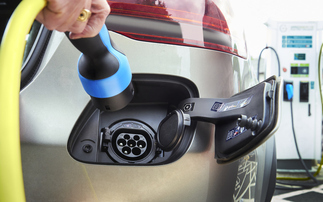
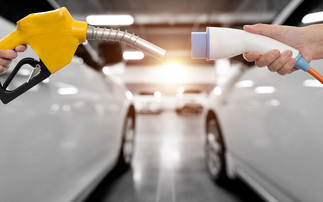
By 2020, the UK could slash carbon emissions from the transport sector by a quarter, but only if the government changes the direction of its green transport policy - shifting focus from cutting-edge technologies, such as electric cars, towards offering incentives for businesses and commuters to embrace lower carbon transport options.
This is the conclusion of a new report from the Campaign for Better Transport, which uses the Department for Transport's own carbon emission projections to argue that the government's focus on improving cars' fuel efficiency through technical innovations is proving misguided.
The report claims that various policies designed to enhance vehicle efficiency will only reduce carbon emissions by five per cent by 2020. It argues that, in contrast, measures to curb emissions from commuting and freight will provide deeper emissions cuts at lower costs.
"Our view is that the government is investing in the wrong areas and contrary to popular belief emissions cuts from transport are both achievable and cost effective," said Jason Torrance, campaigns director at the lobby group. "The government is focused on improvements to cars that will take 15 years to reach the mainstream, when there are many more effective short-term measures that should be being pursued."
The report claims that because 37 per cent of transport emission is work related, greater support to help firms develop low carbon travel plans, and incentives for those that do seek to promote home working, car pooling or teleconferencing could deliver deep cuts in emissions in the short term while helping to cut business travel costs.
It also urges the government to develop a more coherent policy for tackling freight emissions, which account for a third of UK transport emissions.
"Supporting haulage operators to help them improve maintenance across their fleets and providing incentives for firms to use rail and water freight would make a big difference," said Torrance. "We also need investment to tackle the rail and waterway bottlenecks around ports and rail hubs such as Reading."
Green taxes on high-emission vehicles and air travel were also highlighted as an effective means of encouraging behaviourial change, despite the government's expected decision today to delay plans for higher taxes on the most polluting cars.
"In reality, the cost of motoring is coming down and the cost of public transport is going up, as evidenced by last week's above-inflation increase in rail ticket prices," said Torrance. "There is an opportunity to close that gap [through tax measures], but it looks like an opportunity the government will miss."
A Department for Transport spokesperson said the government agreed with the report's central conclusion that there is a need for robust action to tackle transport emissions. But she argued that this action was being taken through a number of policies designed to promote behaviourial change and switch more freight from roads to rail.
She added that the government was on track to cut carbon emissions to around 18 per cent below business-as-usual levels by 2020.
Just in time delivery models abandoned as firms attempt to cut fuel bills and carbon emissions through increased inventory levels 28 Aug 2008
Government announces £250m cash injection to help car industry retool for low-carbon economy as part of "green" transport package, but campaigners remain unimpressed 16 Jan 2009
Engineering giant claims almost a third of its venture capital investment portfolio is focused on clean tech 10 Jul 2009
Energy giant shells out undisclosed sum for a pipeline of solar photovoltaic projects in the south of France 10 Jul 2009
From magnetic cars to rows over greenwashing, we run down the top stories from the past week 10 Jul 2009
Bill Beaver takes the microscope to the backroom deals that will shape the future of the US climate change bill 09 Jul 2009
Whenever a big story breaks about the dire straights in which the natural world finds itself, it always sparks something of a... 07 Jul 2009