The fledgling carbon offsetting industry received a major boost today after an influential group of MP's concluded the sector could play a "useful role" in reducing carbon emissions and urged the government to modify its proposed offsetting standard to ensure that a wider number of projects can attain the accreditation.
The report from the Environmental Audit Committee accepted that some offset projects remain "less than robust" and that greater regulation was required. But it also concluded that offset schemes were a valid mechanism for tackling climate change and that "encouragement and assistance must be given to individuals, organisations and companies to offset".
Moreover, the report supported calls from many of the UK's leading offset providers for the government to relax the criteria offset projects will have to meet to attain its proposed offsetting gold standard.
The first draft of the Defra standard, released earlier this year, proposed that only certified emission reductions (CERs) achieved through projects included in international carbon emission reduction programmes such as the UN's Clean Development Mechanism could attain the government's gold label.
However, at the time the standard was released only four offset providers met the criteria and many within the industry claimed that such stringent entry requirements meant that scientifically-legitimate verified or voluntary emission reductions generated through projects that are too small to gain UN accreditation would be unfairly excluded from attaining the standard.
The Environmental Audit Committee endorsed this line of argument arguing that Defra's code of practice could undermine legitimate projects and "seriously affect the growth of the Verified Emissions Reduction market".
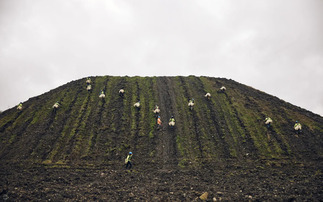
The report also gave succour to forestry-based offset projects, many of which have been criticised by environmentalists for failing to deliver verifiable emission reductions. "It would be entirely wrong to consider this part of the market as either a cheap or a disreputable one," the report concluded. "Some of the most rigorous and environmentally beneficial of all projects come from the stewardship of tropical forests and the well-judged re-forestation or afforestation of land in the tropics."
The only section of the offset industry to face serious criticism from the committee was the airline sector, which it claimed had a "generally unsatisfactory attitude towards offsetting" and had an obligation to improve its various offsetting schemes.
The report provides a major fillip to offset providers who were last week left reeling by a major investigation for Channel 4's Dispatches programme which uncovered a series of offset projects that were not delivering advertised emission reductions and failed to pass the "additionality" tests that prove investment from offset providers is essential for the project to succeed.
But the Environmental Audit Committee insists such dubious projects are the exception rather than the rule and argues offsetting can provide "a vital component of commercial activity and corporate responsibility" as we transition towards a low carbon economy.
Environmentalists, however, criticised the committee's stance claiming it was guilty of overstating the benefits that can be accrued from offsetting. Friends of the Earth climate campaigner Mary Taylor insisted that there were still doubts over the benefits from many offset schemes, adding that they could also undermine businesses' commitment to making real reductions in their own carbon emissions. "We cannot afford to be distracted by measures that at best only have a small role to play in providing the solutions to global warming," she warned.
But the MPs' report countered the view that offset schemes could displace other emission reduction investments, arguing that there is little evidence to suggest buying offsets hampers individuals' other emission reduction efforts and suggesting that further research is required before concrete conclusions on any link are reached.
Government's quality mark to only support Kyoto-approved credits, but Defra insists it will extend scheme for voluntary credits if industry can develop a robust standard 19 Feb 2008
Analyst firm predicts attempt to ensure all projects issuing carbon credits are "additional" will curb supply and force up prices 24 Jun 2008
Middle East, Japan and US targeted as offset provider seeks to take advantage of markets "exponential growth" 11 Jan 2008
Environmental Audit Committee report calls on government to listen to the latest science and include stricter emission targets in new bill 30 Jul 2007
Focus on energy savings through fuel efficiency for homes and public and commercial buildings 04 Jul 2008
ActionAid accuses G8 of driving more people into poverty by pursing biofuels and cutting agri-aid 04 Jul 2008
Businesses' new found focus on the environment may be welcome, but according to Conrad MacKerron, it is taking attention away from workers' rights issues – and the credibility of the entire green business movement could be at risk 03 Jul 2008
It may be a year old, but as Dell's Jonathan Perry explains, firms looking to get rid of their old IT kit still need to pay attention to the WEEE directive 02 Jul 2008
Telling customers about your environmental targets is all well and good but, as Paul Thomas argues, they are meaningless if you do not know how they are to be achieved 01 Jul 2008