BusinessGreen.com: You were recently awarded an OBE for
services to corporate social responsibility, where did the company's focus on
sustainability and CSR come from?
Jonathan Adnams: Adnams was established in 1872. As such we've been
here for the long term and want to be sustainable for the long term. About 15
years ago we undertook an exercise to try and build our brand and part of that
was to try and establish what our brand values were. We drew up a formal list of
10 values and at the core was a belief that any business that wants to operate
for the long term needs to build respect from customers, neighbours and the
environment. If you are not respected at some point you get a fracture point in
the brand, and there are many examples of businesses allowing that to happen.
Where did the environment fit into these values?
The need to protect the environment was one of the core values. There
wasn't some conscious decision to go green it was just part of the over-arching
value set, but in more recent times that has filtered through to influence some
of the infrastructure decisions we have made.
How has it affected your operations?
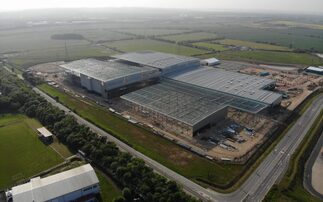
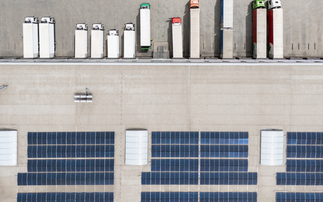
Our distribution centre which opened in Raydon in 2006 was the first
industrial building in the UK to be built using entirely sustainable material
and features hemp-lined building blocks and a green roof that actually absorbs
carbon. While our new brewery in Southwold, which opened in 2007, is the first
brewery in the UK to include a full energy recovery plant. We capture 90 per
cent of the steam produced during the brewing process and reuse for heat across
the facility – that has saved up 31 per cent on our gas bills. We also reduced
the weight of our bottles by 34 per cent, which has saved 415 tonnes of CO2 a
year, or equivalent to the transport-related carbon emissions of our entire
sales force.
Those are all large infrastructure projects. What about day-to-day
activities?
We encourage staff to switch off lights and computers and so on, but as I said
we have worked hard to really make these values part of our culture. That has
been achieved over a long period – it has taken 15 years to get here – but
considering environmental impacts is now second nature to our staff. There is
also a commercial upside as you build respect from customers and people will
want to do business with you, and repeat business as well.
Can you give an example of these commercial upsides?
Last year we brought out Adnams East Green - the first carbon neutral beer in
the UK. Tesco came to us and said "could you make a carbon neutral beer?" I've
no doubt they came to us because we had the credibility and the [low carbon]
infrastructure in place. Now we are using barley and hops grown in Suffolk for
the beer, we brew it at our brewery, which has a very low carbon output, put it
into lightweight bottles, and distribute it through our green distribution
centre. We keep emissions as low as possible, then offset the remaining
emissions at a cost of half a pence a bottle with the whole process verified by
the Carbon Trust. We've seen a lot of interest in the product and we are now
investigating taking more carbon out of the process and trying to make the whole
thing carbon neutral without offsets.
For mid-sized businesses on a similar scale to Adnams it is often
difficult to justify green investments, particularly in the current economic
climate. How do you make a case for these types of projects at a time when
budgets are tight?
It is very easy to go down the cost cutting route and the problem is that some
of these types of initiatives do have larger costs up front. But if you believe
you will be in business in the long term, you get the rewards in the long term.
We could have built a standard steel distribution centre, but we measured the
proposal against our values and realised the energy and emissions would be highe
r and we should go with the greener option.
From a commercial perspective how do you maintain those values when a
business is under short term pressures?
It has to start at the top and you need the support of the shareholders. If they
just want to maximise quarterly profits then they are not going to go on this
journey. And I know I keep saying this, but it has to be embedded within the
whole organisation and needs buy in from everyone so environmental
considerations are included in all projects. So many initiatives fail when you
bring in a CSR director and they try to overlay sustainability onto existing
plans.
About Jonathan Adnams
Jonathan Adnams, OBE, became Chairman of the Adnams brewery in Southwold, Suffolk in 2006, having been a member of the board since 1988.
He was recently awarded an OBE for his services to corporate social responsibility.
Our brave fighters have now broken through the halfway point of their training regimes and the countdown to CRN Fight Night has begun. Sara Yirrell catches up with some of the boxers to see how they are shaping up 03 Apr 2009
CSR reports are increasingly part of the business mainstream, but how do you assess whether or not they are actually working? In the last of its three-part series BusinessGreen.com investigates 26 Mar 2009
From hybrid price wars to mysterious clean technologies, BusinessGreen.com runs down the most popular stories from the past 12 months 30 Dec 2009
Cameron presents pre-election energy policy, promising greater investment certainty for low-carbon projects, green loans for households, and streamlining of planning system 19 Mar 2010
Joint statement from carbon exchange and Hungarian government aims to restore confidence in CER market 19 Mar 2010
From climate change contrarians to the "KitKatastrophe" of Nestle's palm oil policy, we look at the best the green web has to offer this week 19 Mar 2010
From the government's plans for a marine energy revolution to John Lewis' proposals for an off-grid supermarket 19 Mar 2010