27 Jul 2011

Motorway service stations are throwing aside their less than glamorous reputation to play host to the world's first national recharging network for electric cars.
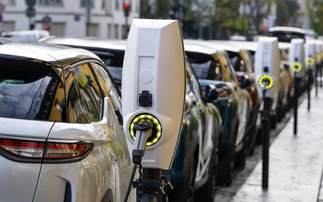
A charge point comes online today at South Mimms services in Hertfordshire, and will be followed by so-called top-up zones at 11 more Welcome Break motorway services by September. Within 18 months, the network will have expanded to encompass all 27 of the company's locations, running from the EuroTunnel services in Kent to Abington in Scotland.
Registered users will be able to refuel their electric car for free at the stations, which are fitted with a standard charge point. This will allow drivers to charge overnight while staying at adjoining hotels. The stations will also have a rapid charge point that will fully charge most electric vehicle (EV) batteries within two hours or deliver an 80 per cent top-up within 20 minutes.
The points will be powered by wind or solar energy from green electricity firm Ecotricity, which has also fitted a charging post by its iconic turbine next to the M4 motorway in Reading, making it the first to be powered directly from wind energy.
When the network is complete, drivers will be able to travel from London to Scotland or the South West without worrying about running out of power, and will also for the first time be able to make the trip for free.
Ecotricity reckons moving charging networks outside of urban areas will be a first step towards overcoming the so-called range anxiety. Studies have repeatedly highlighted this as one of the main barriers to the uptake of EVs, even though more than 99 per cent of car journeys can be made within the 100-mile range boasted by most electric cars.
"Statistics show that it's not in towns and cities where electric cars need to recharge, but on longer journeys between cities, and that means motorways," said Dale Vince, founder of Ecotricity. "We're creating the infrastructure to get Britain's electric car revolution moving."
The WWF estimates 1.7m electric cars will need to be on the road by 2020 to meet the UK's emissions reduction target. However, critics warn a substantial expansion of electric cars would overload the country's creaking grid, while the government has scaled back plans for "uneconomic" public charging points.
But Ecotricity says that powering the UK's total fleet of 28m cars would require an extra 50 terrawatt hours of electricity delivered through the grid. This 13 per cent increase on current output could be met by installing another 10,000 wind turbines, it said.
The company is also keen to stress the cost savings of converting to electric motoring: an individual driving 12,000 miles a year could save almost £2,000 in petrol costs and about 2,500kg of CO2 emissions.
"This marks the beginning of the end for the old combustion engine," added Vince. "With world oil prices going through the roof, you'll now be able to get around Britain using only the power of the wind."
LATEST STORIES ABOUT AUTOMOTIVE
YOU MAY ALSO LIKE
LATEST JOBS
TODAY'S TOP STORIES
HIGHLIGHT
Market has failed to provide sufficient new capacity to deal with increase in demand, energy minister warns
INSIGHT
INSIGHT
Service provider builds a compact, energy-efficient and scalable IT infrastructure
A look at alternative approaches to managing energy for cost and/or sustainability reasons in data centres
WHAT DO YOU THINK? Add your comment
Power Networks & EVs
The article mentions “critics” and their concern with respect to EVs overloading power networks. However, there is no mention of these “critics”. Was this an attempt to give “balance”. A series of studies (BERR 2009 and the recent WWF report) have shown that the EVs would have minimal impact on overall power demand. However, there would need to be some time shifting with respect to charging of EVs on a winter evening. The tech to do this is trivial. Finally, the power network ain’t creaking but will need reinforcement to accommodate both RES and low carbon loads.
Posted by Mike Parr, 28 Jul 2011
Not with fast charging stations of 30amps
What one must also take into account is that it would take "Overnight" or 6 hrs only if you are using a normal charging facility - if u can use 30amps turbo charger (which would be available on most new Electric Cars) this process would take less than 60 minutes... Again take into account bigger larger cars made by General Motors/TESLA etc. that have more than 200 kms range.. This is not bad at all..Once these cars get accepted by more and more people - companies WILL come out with bigger batteries and better ranges.
Posted by Sudheer Godgeri, 27 Jul 2011
Yes but...
quote - With world oil prices going through the roof, you'll now be able to get around Britain using only the power of the wind What anyone fails to mention is that it with all the overnight stops, it will probably take you a week to do it......
Posted by George Jones, 27 Jul 2011