Lewis wind farm rejection to hit renewables investor confidence

Industry body warns planning rejection could force some UK wind farm operators to look overseas for investment opportunities

By James Murray

21 Apr 2008

Be the first to comment

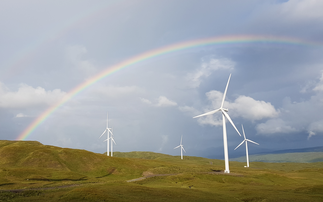
Wind farm

The chances of the government's targets for renewable energy being met received a major blow today after the Scottish government rejected plans to locate one of Europe's largest onshore wind farms on the island of Lewis in the Outer Hebrides.

The decision prompted outcry from the renewables industry, which said it would deal huge blow to investor confidence, could force UK wind farm developers to turn their attentions overseas and make it harder for the UK to meet EU targets to generate 15 per cent of energy from renewable sources by 2010.

Speaking earlier today, Scottish energy minister Jim Mather said that the £500m 181 turbine development would have had "significant adverse impacts" on rare birds living on Lewis' peat moors, breaching European legislation.

He added that the decision did not represent a U-turn for the Scottish National party government, and insisted the government remained committed its plans to deliver a major expansion in the country's renewable energy capacity.

The Lewis wind farm would have been expected to generate 650MW, almost a tenth of Scotland's electricity needs, but it attracted objections from nearly 11,000 islanders who claimed it would devastate the peat lands.

Lewis Wind Power, the joint venture company set up by infrastructure giant Amec and utility firm British Energy, to undertake the project issued a statement claiming it was "bitterly disappointed " by the decision, adding that it had undertaken extensive studies to limit the development's impact on the environment and believed that it had demonstrated the plans would not violate European law.

"The wind farm would have contributed 650MW of renewable energy to help the fight against climate change and paved the way for an interconnector to the mainland to encourage more investment in other renewable technologies," the company said. "Sadly, all of this has been lost because of the Government decision which, we believe, represents a huge missed opportunity."

The British Wind Energy Association (BWEA) reacted angrily to the news claiming the decision could also have an adverse effect on investor confidence across the UK wind industry.

"Lewis Wind Power has spent £5m on a planning process that it was invited to enter at the behest of the Scottish government," said BWEA spokesman Nick Medic. "The sector does not have infinitely deep pockets and for mid-sized wind farm operators the prospect of losing £5m represents an unacceptable level of risk. If [these types of decisions] continue they will have to look abroad to countries such as Spain with far more consistent planning regimes."

The decision could also deliver a blow to the UK's chances of meeting EU targets to generate 15 per cent of its energy from renewable sources – a target experts believe will require over 35 per cent of electricity to come from green sources to make up for the limited contribution expected from renewable heat sources.

"There is a finite number of locations where it is economically and technically feasible to locate wind farms," explained Medic. "Lewis was selected because it ticked all the boxes as a site with a good wind profile and minimal environmental impact. It now means that one important site has been ruled out."

WHAT DO YOU THINK? Add your comment


Greg Barker has said that despite cuts to solar incentives the industry will continue to grow this year - is he right?

4%

7%

7%

82%

INSIGHT

Submit your email address and we'll send a link to a personal newsletter control panel


Mechanical Integrity Engineer

09 Feb 2012

Mechanical Integrity Engineer, 35,000-45,000, Midlands A global power organization are looking to identify a Mechanical Integrity Engineer to become part of a globally accalimed engineer department. Delivering R&D Projects in relation to the business' GAS and Steam Turbine operations - the role will challenge the engineers mechanical design capabilities and integrity of company products. The succe

APC

Guidelines for specification of data centre power density

The science and practical application of an improved method for the specification of power and cooling infrastructure for data centres

Quocirca

Powering the data centre

A look at alternative approaches to managing energy for cost and/or sustainability reasons in data centres