11 Mar 2009
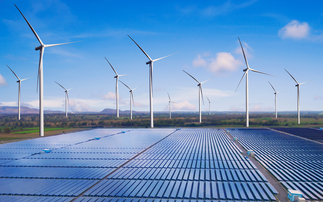
Businesses considering deploying small-scale solar arrays were today advised to ditch traditional configurations for the technology in favour of a new approach that promises to deliver significant improvements in reliability and yields.
Speaking at the IARU Climate Congress in Copenhagen, Professor Dan Kammen of the University of California, Berkeley, said that the established technique of linking a number of solar panel in a series was outdated and leading to lower energy outputs.
He explained that individual panels were typically linked together so that the resulting AC power could be passed through a single inverter to create DC power that could be used in the building.
However, Kammen argued that this approach only made sense in the 1950s and 60s when inverters were expensive and installers could only afford to deploy one large inverter for the whole array. He added that by linking panels in a series, the output from the worst performing panel, that had been covered by shade or bird droppings for example, would bring down the overall yield.
"You only have to do high school physics to see this approach is dumb, but we are still doing it," he said, adding that inverter technology was now so cheap it could be found in people's mobile phones.
He argued that those looking to deploy rooftop or small-scale solar panels should instead ensure that each has its own inverter and feeds energy direct to the household so as to maximise output.
Kammen also called for the widespread adoption of a more intelligent financing mechanism to support the deployment of solar panels and other low-carbon technologies, and allow users to pay back the upfront costs over time.
"How many of us would have a mobile phone if we had to buy 20 years of minutes up front?" he asked.
LATEST STORIES ABOUT TECHNOLOGY
YOU MAY ALSO LIKE
LATEST JOBS
TODAY'S TOP STORIES
HIGHLIGHT
The best green companies in the UK should be preparing their entries for annual BusinessGreen Leaders Awards
INSIGHT
INSIGHT
The science and practical application of an improved method for the specification of power and cooling infrastructure for data centres
A look at alternative approaches to managing energy for cost and/or sustainability reasons in data centres
WHAT DO YOU THINK? Add your comment