Concrete must not go to landfill, warn experts

UK leads Europe in recycling about 22 per cent of its construction waste, but experts insist more must be done

By Cath Everett

24 Jul 2009

Comments: 1

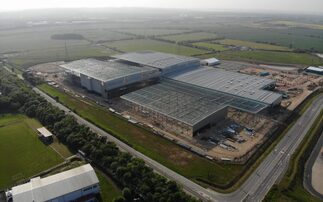
Construction site

The UK's Green Building Council yesterday endorsed calls for a "zero landfill" target for concrete waste, but argued that any mandatory targets for sustainable construction must go further and cover the entire production life cycle.

The assertion came after the World Business Council for Sustainable Development's Cement Sustainability Initiative (CSI) released a new report entitled Recycling Concrete, designed to boost the amount of concrete recycling that takes place.

An estimated 25 billion tonnes of concrete are manufactured globally each year, but a huge 900 million tonnes of construction and demolition waste – of which between 20 and 80 per cent comprises concrete – is created annually in Europe, the US and Japan alone, primarily as a result of demolishing buildings.

Much of this waste goes into landfill, although the UK currently leads Europe in recycling about 22 per cent of it, primarily for use as aggregate in road sub-bases. The Netherlands also recycles about 21 per cent, Belgium 16 per cent and Switzerland about nine per cent.

But the CSI believes more can be done and is calling on governments and
other key stakeholders around the world to develop economic incentives and legislation to promote more recycling, particularly through green building initiatives.

It recommends setting usage targets for recycled concrete in road construction and building and calls on the construction industry to gather waste data to generate reliable global statistics.

John Alker, spokesman at the Green Building Council UK, welcomed the report, saying that it made a lot of sense to reduce and recycle waste as much as possible. But he also indicated that for buildings to become truly sustainable, it was necessary to look at a wider range of additional factors such as water and other resource usage.

Moreover, he added that concrete may have a part to play in helping to reduce carbon emissions from buildings in use as it is "thermally massive and so retains heat in winter and is cooler in summer", reducing the amount of energy used for heating and cooling.

"But over time, as we become increasingly successful in reducing in-use emissions, more attention will have to turn to material-related issues such as how much energy it takes to produce the concrete in the first place," Alker said.

To this end, the Council produced a report called A Code for Sustainable Buildings this spring, recommending that mandatory targets be set to cover the entire construction life cycle from material extraction to destruction and recycling.

Phase two of the initiative is expected to begin within the next year to 18 months and, following consultation between government and industry, will develop with a clear road map for action.

WHAT DO YOU THINK? Add your comment


Greg Barker has said that despite cuts to solar incentives the industry will continue to grow this year - is he right?

8%

7%

9%

76%

INSIGHT

Submit your email address and we'll send a link to a personal newsletter control panel


Mechanical Integrity Engineer

09 Feb 2012

Mechanical Integrity Engineer, 35,000-45,000, Midlands A global power organization are looking to identify a Mechanical Integrity Engineer to become part of a globally accalimed engineer department. Delivering R&D Projects in relation to the business' GAS and Steam Turbine operations - the role will challenge the engineers mechanical design capabilities and integrity of company products. The succe

APC

Guidelines for specification of data centre power density

The science and practical application of an improved method for the specification of power and cooling infrastructure for data centres

Quocirca

Powering the data centre

A look at alternative approaches to managing energy for cost and/or sustainability reasons in data centres