23 Apr 2008
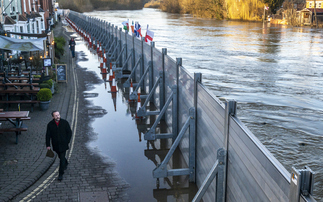
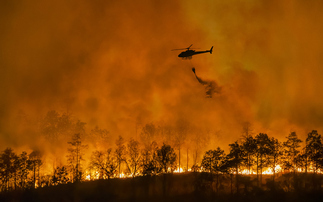
If climate change is not slowed it will spark conflicts of a similar magnitude of the two World Wars, except that instead of lasting five years they will wage for centuries.
That is the stark warning not of an apocalypse-predicting cult, but a report from one of the UK's most respected defence think tanks, the Royal United Services Institute (RUSI).
Released today, the report from former advisor to the Prime Minister's strategy unit and chief executive of environmental group E3G Nick Mabey argues that over the next few decades climate change will drive as significant a change in the global security environment as the end of the Cold War.
It also claims that the international response to the security threat posed by climate change has been "slow and inadequate" and that governments must integrate climate change into their security strategies as a matter of urgency.
Moreover, the report calls for a tenfold increase in clean tech research spending to help ensure the worst effects of climate change are avoided.
Speaking to The Telegraph, Mabey said that governments were guilty of ignoring the possible worst-case scenarios when addressing the climate change threat. "We are preparing for a car bomb, not for 9/11," he said, adding that planning for the top of the temperature range scientists are predicting would help accelerate investment in clean tech. He insisted this investment would not be wasted if temperature increases proved more manageable as the development of clean technologies would be required anyway.
The report argues that a failure to mitigate climate change would lead to a complete change in the global security landscape, noting that "our energy and climate security will increasingly depend on stronger alliances with other l arge energy consumers, such as China, to develop and deploy new energy technologies, and less on relations with oil-producing states".
Mabey joins growing numbers of defence experts who are convinced that global warming will provide the greatest threat to long-term stability this century. Commentators have already linked the conflict in the Sudan with global warming and experts have repeatedly speculated on the huge migration and attendant security risks that would be caused by long-term droughts in India or China.
Speaking last year John Ashton, a senior diplomat at the Foreign Office, argued that climate change should be presented as a security issue to mobilise faster political action.
"We tend in our societies to take security more seriously than anything else and you can do a lot of things in response to a security problem that you cannot do in response to another type of problem," he said in an interview with Channel 4 News. "You can mobilise, for example, public investment much more quickly and on a much bigger scale."
The RUSI report also further highlights the security factors businesses should account for when assessing the medium to long-term risks posed by climate change.
LATEST STORIES ABOUT RISK
YOU MAY ALSO LIKE
LATEST JOBS
TODAY'S TOP STORIES
HIGHLIGHT
Model X sports Back to the Future-style "falcon doors" and is set to go on sale in 2014
INSIGHT
INSIGHT
The science and practical application of an improved method for the specification of power and cooling infrastructure for data centres
A look at alternative approaches to managing energy for cost and/or sustainability reasons in data centres
WHAT DO YOU THINK? Add your comment