UK plug-ins to rechargeable Prius

Toyota has launched a trial of plug-in hybrid technology in Britain

By Andrew Donoghue

12 Sep 2008

Be the first to comment

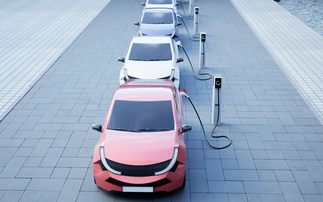
Japanese car maker Toyota has begun testing plug-in hybrid technology on public roads in the UK – technology which some experts believe could even allow drivers to sell electricity back to the grid.

Announced this week in a joint deal with French-owned power company EDF, the move sees Britain become the fifth country to participate in tests of the technology which is widely seen as being the next stage in the evolution of hybrid vehicles. The plug-in hybrid vehicles are essentially modified versions of Toyota's hybrid car the Prius.

Plug-in hybrid engines have several advantages over existing technology in that they have larger batteries giving the vehicles greater range and can be plugged into standard house-hold 240V mains sockets. The tests, which are planned to take a year or more, will involve setting up infrastructure, evaluating vehicle performance and ease-of-use, and getting user feedback, Toyota claims.

"Today's announcement represents a step-change towards acceptance of electricity in combination with hybrid technology as a viable and sustainable transport solution," said Toyota managing officer Koei Saga, speaking at a press conference in London this week, which was also attended by UK Secretary of State for Business, Enterprise and Regulatory Reform John Hutton,

But despite the ongoing trials of plug-in technology, some environmental experts are frustrated at the speed the technology is being developed. US web search giant Google is already pushing ahead with its own scheme based around plug-in technology called RechargeIT. The company has fitted out about six vehicles with plug-in hybrid engines and plans to include more than 100 plug-in hybrids in its corporate fleet as demand grows and cars become commercially available.

According to Google, Plug-in hybrid vehicles can achieve 70-100 miles per gallon, quadrupling the fuel economy of the average car on US roads today, and doubling the fuel economy of a regular hybrid car such as a Prius which is currently about 45 miles per gallon.

Toyota's tests involve vehicles equipped with nickel-metal hydride batteries, but Toyota says it is also accelerating development of plug-in hybrid vehicles equipped with lithium-ion batteries. The car-makers claims that sales of cars equipped with lithium-ion batteries to fleet owners are planned to begin next year.

Google is also touting the potential of plug-in hybrids to allow consumers to sell energy back to the grid during times of peak demand. "Plug-in hybrids will often recharge at night using excess power from base-load power plants that are already running, so they will not generally add to peak electricity demand. During daytime peak power usage, plug-in hybrids may be able to sell power back to electric utilities, potentially earning drivers as much as $2,000-$3,000 per year," the company claims on its RechargeIT web site.

WHAT DO YOU THINK? Add your comment


Greg Barker has said that despite cuts to solar incentives the industry will continue to grow this year - is he right?

2%

6%

7%

85%

INSIGHT

Submit your email address and we'll send a link to a personal newsletter control panel


Mechanical Integrity Engineer

09 Feb 2012

Mechanical Integrity Engineer, 35,000-45,000, Midlands A global power organization are looking to identify a Mechanical Integrity Engineer to become part of a globally accalimed engineer department. Delivering R&D Projects in relation to the business' GAS and Steam Turbine operations - the role will challenge the engineers mechanical design capabilities and integrity of company products. The succe

APC

Guidelines for specification of data centre power density

The science and practical application of an improved method for the specification of power and cooling infrastructure for data centres

Quocirca

Powering the data centre

A look at alternative approaches to managing energy for cost and/or sustainability reasons in data centres