Report: Zero carbon global economy possible by 2090

Greenpeace study argues world's energy needs can be met without nuclear or fossil fuels

By James Murray

28 Oct 2008

Be the first to comment

wind turbine

The world's energy needs could be met entirely from renewable sources by 2090, according to a major new study from Greenpeace and the European Renewable Energy Council (EREC).

The 210-page report, entitled Energy [R]evolution: A Sustainable World Energy Outlook, argues that improvements in energy efficiency could slash energy requirements in half compared to business as usual scenarios, enabling renewable technologies to meet the remaining energy requirements.

The study says that by 2050 aggressive investment in renewable energy technologies and energy efficiency could have created a $360bn (£230bn) industry that provides half the world's energy, delivers deep cuts in carbon emissions and slashes more than $18tr from future fuel costs.

Speaking to BusinessGreen.com, Sven Teske, Greenpeace International renewable energy campaign and co-author of the report, said the projections were based on internationally accepted predictions for population and economic growth and that the goal of a zero carbon energy infrastructure could be achieved without compromising economic expansion.

He added that the 2090 scenario was technically feasible even without resorting to nuclear power and carbon capture technologies.

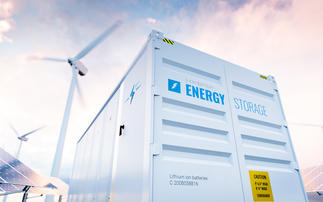
Teske dismissed the argument that nuclear power would be required to provide a base load to back up variable renewable energy sources as erroneous, insisting improvements in renewable energy technologies and energy storage meant nuclear would not be required.

"Hydro-power, concentrated solar power with energy storage, biomass and geothermal are all base load technologies, while tidal power is predictable," he said. "The only variable energy sources are photovoltaic solar and wind."

The report claims that the global adoption of feed-in tariffs and roll out of renewable energy projects can ensure carbon emissions peak by 2050, and argues that huge improvements in economies' energy intensity can be delivered through the adoption of widespread efficiency standards.

"We favour the Japanese top runner model, where the three most efficient TVs, for example, in a market become the standard and the three least efficient are banned within three years," said Teske. "It is a simple and effective model and should be applied to all electrical appliances, buildings and cars."

However, Angus McCrone of analyst firm New Energy Finance argued that while it was feasible to cut emissions much faster and deeper than many government's expect, it was unlikely that the report's vision of a zero-carbon economy could be achieved without resort to nuclear power, at least during the first half of the century.

"The kind of progress required is not feasible without nuclear," he said. " You need to replace the base load of power provided by fossil fuels, and while electricity storage technologies will improve, nuclear is the most feasible option for that over the next 20 to 30 years."

He added that while biomass and geothermal technologies could go some way towards providing a renewable energy base load, they could not be implemented on a sufficient enough scale in many countries to replace fossil fuels. "You will get some places such as Iceland where geothermal can work, but in countries like the UK you will struggle to replace fossil fuels without nuclear," he said.

WHAT DO YOU THINK? Add your comment


Greg Barker has said that despite cuts to solar incentives the industry will continue to grow this year - is he right?

6%

7%

8%

79%

INSIGHT

Submit your email address and we'll send a link to a personal newsletter control panel


Mechanical Integrity Engineer

09 Feb 2012

Mechanical Integrity Engineer, 35,000-45,000, Midlands A global power organization are looking to identify a Mechanical Integrity Engineer to become part of a globally accalimed engineer department. Delivering R&D Projects in relation to the business' GAS and Steam Turbine operations - the role will challenge the engineers mechanical design capabilities and integrity of company products. The succe

APC

Guidelines for specification of data centre power density

The science and practical application of an improved method for the specification of power and cooling infrastructure for data centres

Quocirca

Powering the data centre

A look at alternative approaches to managing energy for cost and/or sustainability reasons in data centres