21 Jan 2008
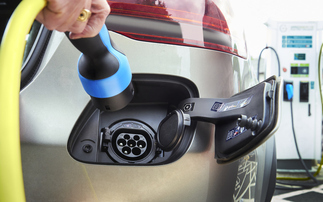
Project Better Place, the new venture from Israeli entrepreneur Shai Agassi that last year unveiled plans to build a committed to $200m global network of electric vehicle recharging stations, has selected Israel as the location for its first nationwide grid of recharging points.
The company said it had today signed a Memorandum of Understanding with the Israeli government and car manufacturers Renault and Nissan designed to deliver for the first time "the conditions necessary for electric vehicles to be successfully mass-marketed".
Under the terms of the agreement the Israeli government will provide tax breaks on zero emission vehicles up to 2019, Renault and Nissan will deliver a new generation of electric cars and battery technologies designed to deliver performance comparable with gasoline engines, and Project Better Place will begin work on building 500,000 recharging points across the country.
The company said the scale of the network combined with new in-car computer technology designed to indicate to the driver the remaining power supply and the nearest charging spot would tackle the problem of limited range that has dogged electric vehicles up to now. Meanwhile, Renault is reported to be working on exchangeable batteries that would solve the problem of long battery recharging times and deliver continuous driving akin to gasoline vehicles by allowing drivers to quickly swap in a new battery at recharging points.
Project Better Place said that with 90 per cent of Israeli car owners driving less than 70km a day and all major urban centres being just 150km apart the country was the ideal location for the first nationwide network of recharging points.
LATEST STORIES ABOUT TRANSPORT
YOU MAY ALSO LIKE
LATEST JOBS
TODAY'S TOP STORIES
HIGHLIGHT
The best green companies in the UK should be preparing their entries for annual BusinessGreen Leaders Awards
INSIGHT
INSIGHT
The science and practical application of an improved method for the specification of power and cooling infrastructure for data centres
A look at alternative approaches to managing energy for cost and/or sustainability reasons in data centres
WHAT DO YOU THINK? Add your comment