30 Jun 2009
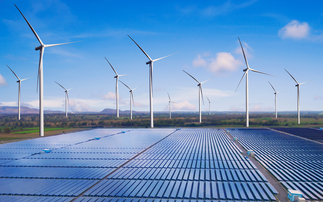
The Chinese government yesterday announced plans for a $140bn (£84bn) wind farm building programme that will see seven giant wind farms, each with a minimum capacity of 10GW, built by 2020.
Once completed, the seven farms will have a combined capacity of around 120GW, accounting for approximately eight per cent of the country's expected total power capacity of 1,500GW in 2020.
The farms will be located onshore in Gansu province, Hami in Xinjiang Uygur autonomous region, Hebei province, western Jilin province, eastern Inner Mongolia, western Inner Mongolia and Jiangsu province.
Announcing the plan, Shi Pengfei, deputy director of renewable energy at the National Energy Administration, said that the new sites in a wide range of areas would develop the industry across the country. China's existing wind energy resources are primarily located in the northern regions and coastal areas.
However, Shi did not specify whether the seven farms would be built as part of China's $586bn economic stimulus plan.
If the developments are financed using stimulus funding overseas, makers of wind turbines may not be able to bid for the projects. Earlier this month, China instituted a controversial "buy Chinese" policy which means state-backed stimulus projects must seek permission from the government before buying foreign goods and services.
The policy does not make clear whether or not the China-based operations of overseas companies would be considered domestic. Suzlon, Vestas and Gamesa are among the foreign wind turbine manufacturers that have operations in the country and it remains to be seen if they will be allowed to benefit from the huge expansion in the China's wind energy ambitions.
LATEST STORIES ABOUT TECHNOLOGY
YOU MAY ALSO LIKE
LATEST JOBS
TODAY'S TOP STORIES
HIGHLIGHT
Companies must be more open about which groups they fund and why, say green marketing experts
INSIGHT
INSIGHT
The science and practical application of an improved method for the specification of power and cooling infrastructure for data centres
A look at alternative approaches to managing energy for cost and/or sustainability reasons in data centres
WHAT DO YOU THINK? Add your comment